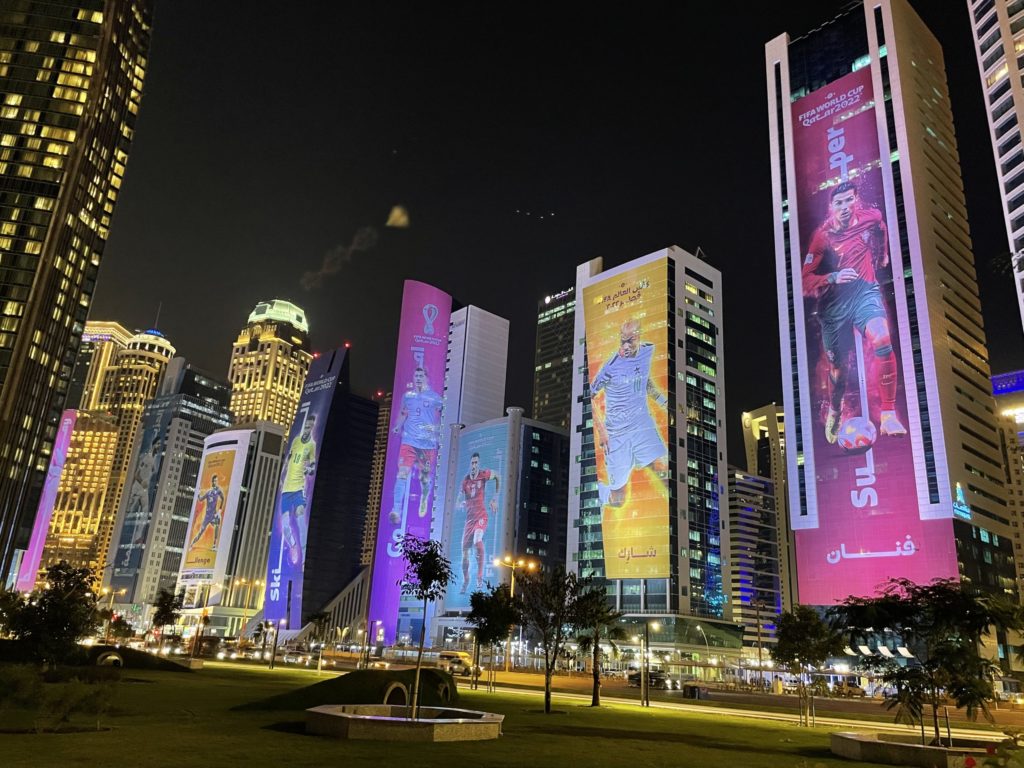
The 2022 World Cup in Qatar was not only the first winter World Cup in history but also was supposed to be a special championship in many other aspects. However, it turned out to be uniquely negative. Meanwhile, the 2014 World Cup in Brazil had issues with organization, but was a super festive and positively emotional event. Qatar’s positioning was initially very unappealing, and I wasn’t even planning to go, although I usually don’t miss World Cup events.
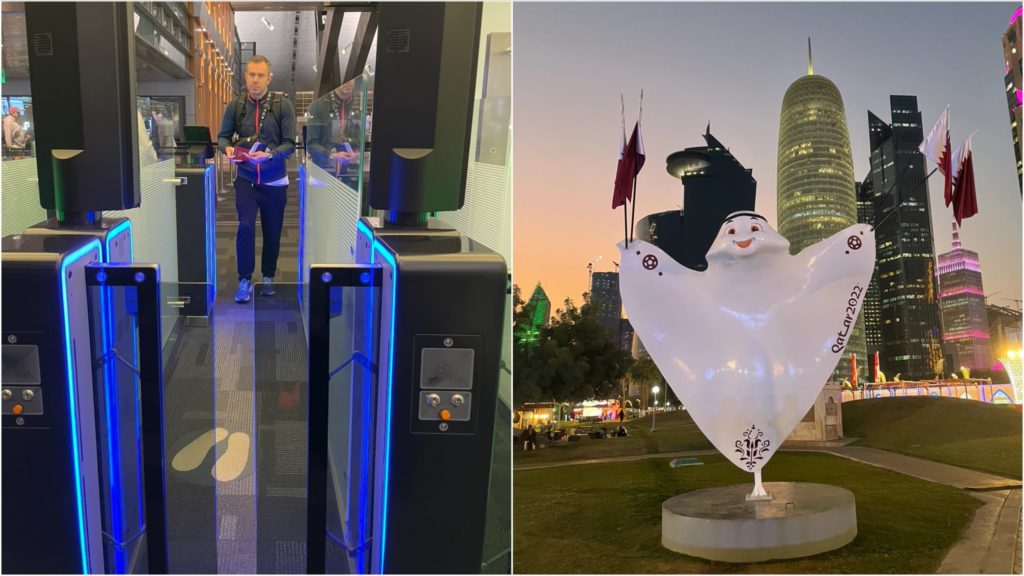
From the very beginning, planning a trip to Qatar was met with clear indications that they were not expecting regular tourist-football fans. Accommodations were only available in some basic huts in the desert for $83 per day, with only group tours on large buses that were uninteresting and unappealing. Furthermore, all travel agencies were ordered to sell only a short list of tourist packages and nothing more. Trying to understand the logic of the authorities and organizers, the only conclusion that came to mind was that they aimed to minimize the number of tourists and control those who did come within strict, standardized behavior.
A widely spread ban on selling beer, despite the contract being signed weeks before the championship, only confirmed this hypothesis. The so-called fan-zones, which were actually massive reservations, also looked unattractive and were poorly organized, with nothing to do except wander aimlessly among souvenir tents and silly stands. We went there once out of curiosity.
Of course, after the initial desire to cancel the trip, the second desire was to find a concierge to organize an interesting and comfortable journey. Even there, wonders started to happen. The airport transfer cost $1200 (as a side note, Uber was $35, and official taxis were $25, both without any issues), and a boat trip cost $70,000! Well, not exactly a boat but a small yacht with drinks and snacks. Nevertheless, it was still ten times more expensive than a similar service in Dubai, for example. Restaurants required advance payment, and table reservations had exorbitant fees, all booked months in advance. And the list goes on.
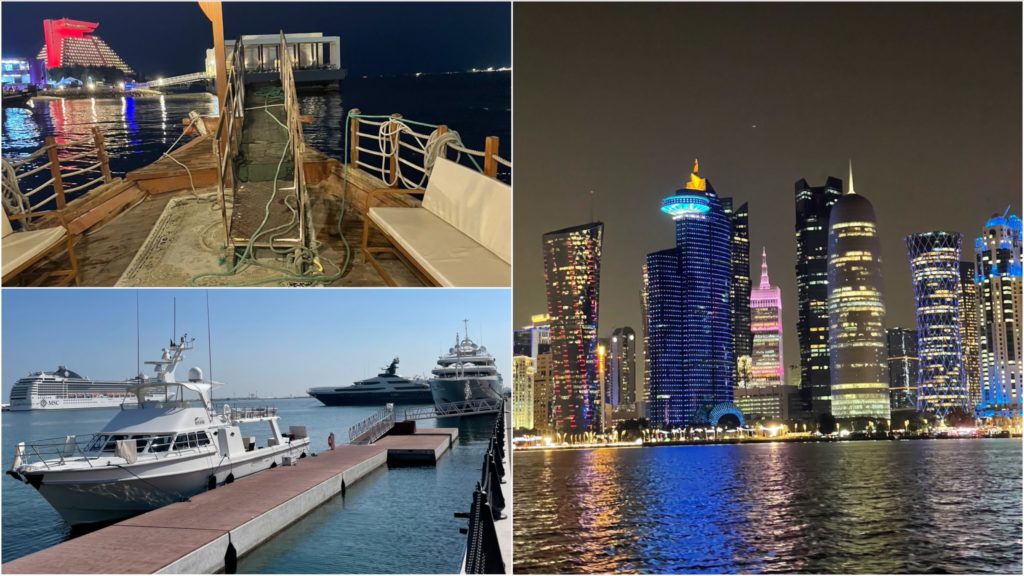
After much consideration, we decided to go. We bought Hospitality tickets, which are a type of ticket that is officially marked up by 4-5 times, but it eliminates quotas and queues. In addition, it grants access to a zone with food and drinks, but it hardly compensates for the price difference. Moreover, in Qatar, these zones were located outside the stadium to allow alcohol to be served. Not very convenient. We also found someone who took on the challenging task of organizing everything remotely. Surprisingly, everything turned out much better than expected (perhaps because our expectations were low?) We also made many arrangements on the spot. For example, we went on a boat trip that cost $7! We were approached by a tour on the waterfront who took us to a wooden boat with an engine. There were only about seven passengers, and we paid $7 per person for an hour-long ride around Doha Bay. The night view of the city from the water was stunning; we didn’t need anything more. And it only cost $7! 🙂
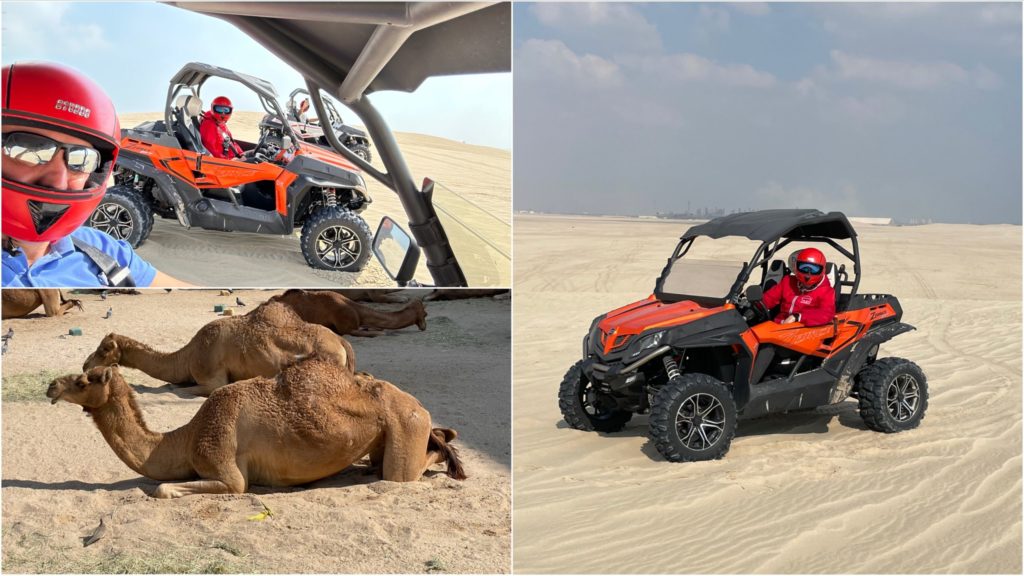
We arrived during the semi-finals and the final, when the main excitement had already passed, and most of the fans had left Qatar. The organizers, apparently, had managed to improve the processes a bit. Overall, there was almost no chaos in the city. To see the entirety of Qatar, excluding the football events, you only need about three days. That’s roughly how long we stayed because we were flying to Al-Ula, Saudi Arabia, for another three days. More about that separately; you can watch the video for now.
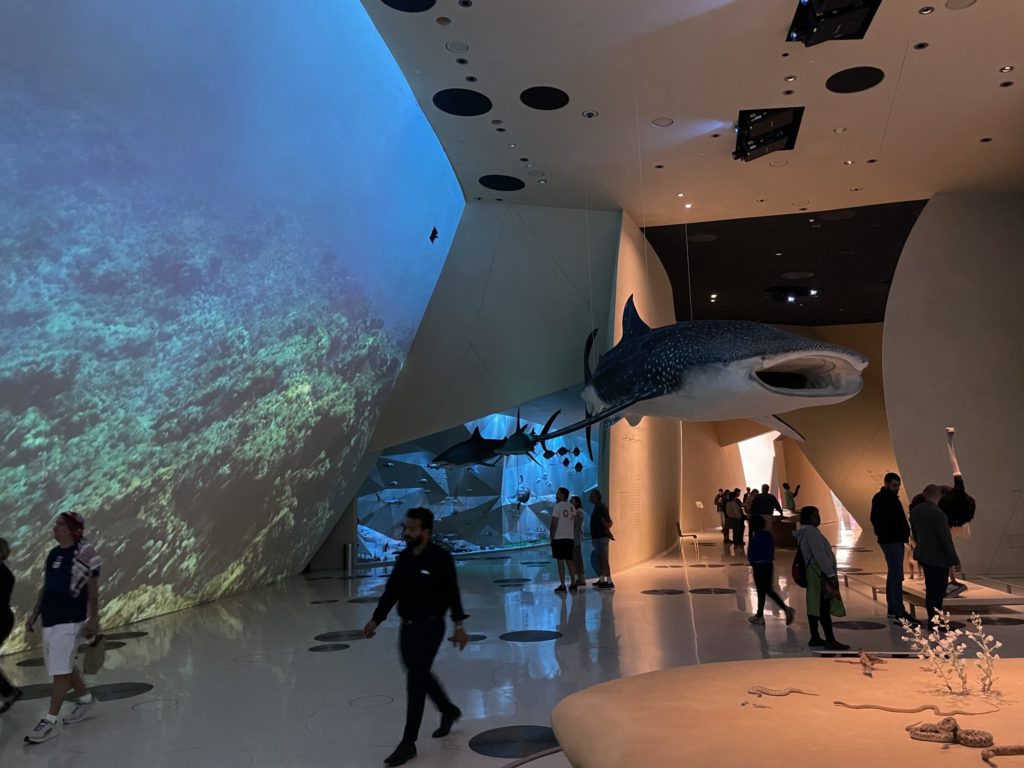
One must-visit place is the National Museum of Qatar. We laughed at how the budget of the world’s largest projection screen manufacturer seemed to be most spent here. Every inch of the museum was covered in these projection screens. It might look kitschy, but the museum provided a very good impression and gave a comprehensive overview of Qatar’s history and its present. The excessive cost can be forgiven, considering Qatar’s challenging situation. The annual budget surplus is about 50%, and this small country has to find ways to spend around $40 billion each year. Since 2022, when gas prices skyrocketed, I can’t even imagine how much the surplus has grown. Gas represents 85% of Qatar’s export revenues. Hence, such extravagant spending on the World Cup and everything else.
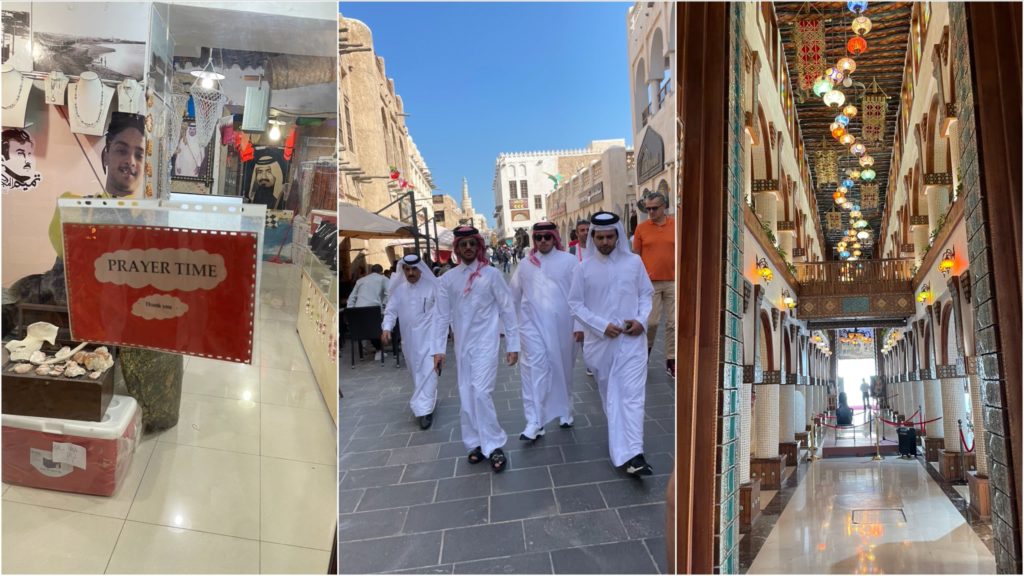
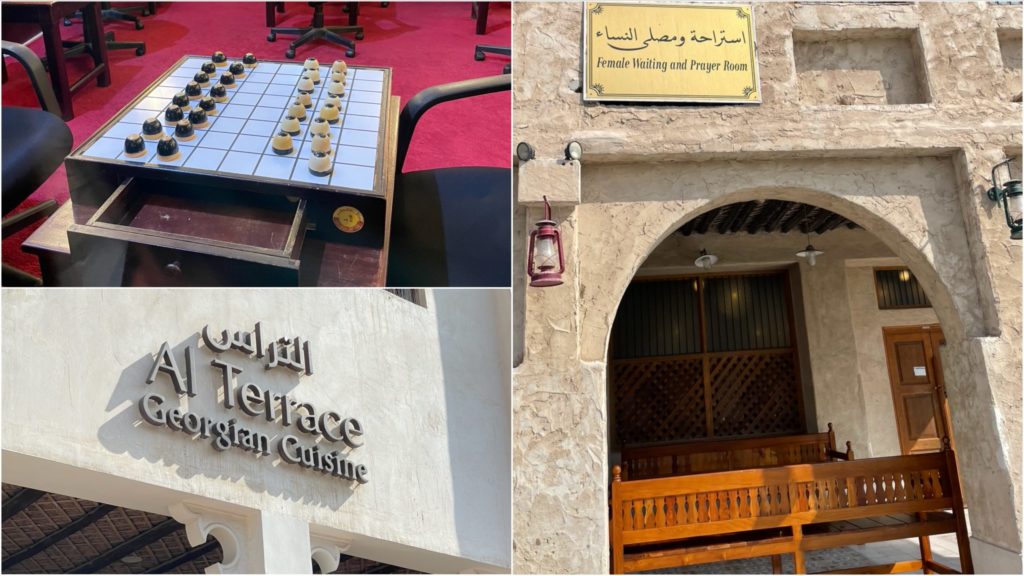
Qatar built several huge fan zones, where usually fans have a lot of fun and enjoy themselves. But just as in Moscow in 2018, where Nikolskaya Square became the symbol of the championship, in Qatar, the Souq Waqif market became that symbol. This market is entirely new and had to be rebuilt after a fire. But it was very well-done and atmospheric. It reminded me of another famous new place, Lijiang in China. This market was a true fan festival, and there were also many lovely restaurants, narrow streets, traditional shops, and small museums that you could simply enter and explore, much like shopping in a store.
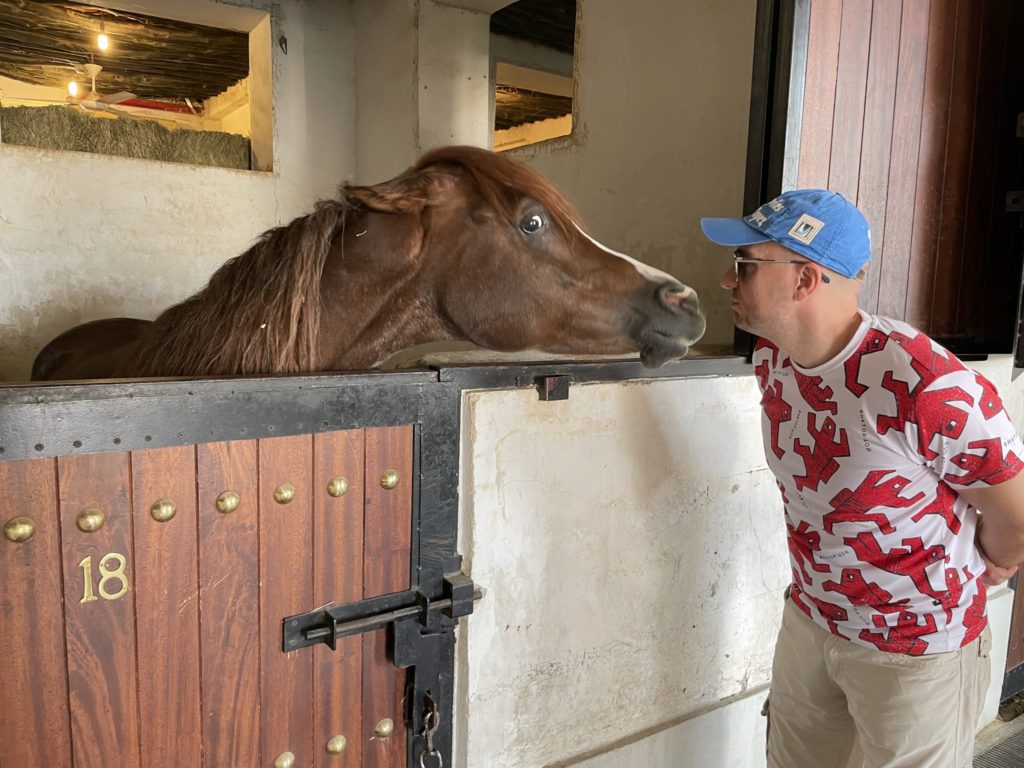
The most surprising thing to me was the museum and the nearby falcon hospital. Falconry is practically a cult in Qatar, and it is a much more government-approved way to show off than sports cars or other luxury items.op-tier falcons are expensive, so the hospital for them is no different from a VIP hospital for people, in terms of the variety of specialists and diagnostic equipment. In a separate room in the hospital, they displayed stuffed special falcons from the past. I can only imagine if Medsi Premium had mummies or stuffed animals of celebrity patients instead of photos on the walls…
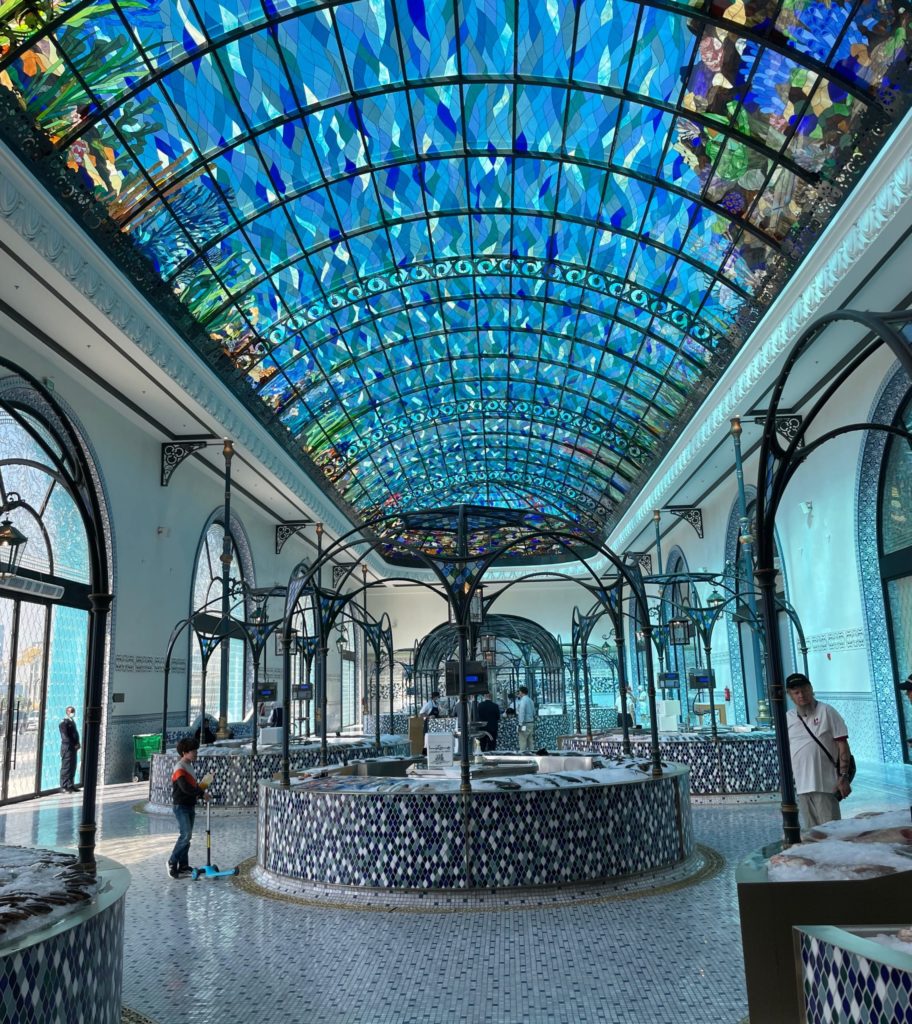
Another place that deeply amazed me was the fish market. You can see it in the photo below. By mistake, we ended up in the wrong area where there was absolutely nothing to do, and our guide suggested a visit. The market was a true work of art. Moreover, it was about 15 degrees Celsius inside, while outside it was +32 degrees.
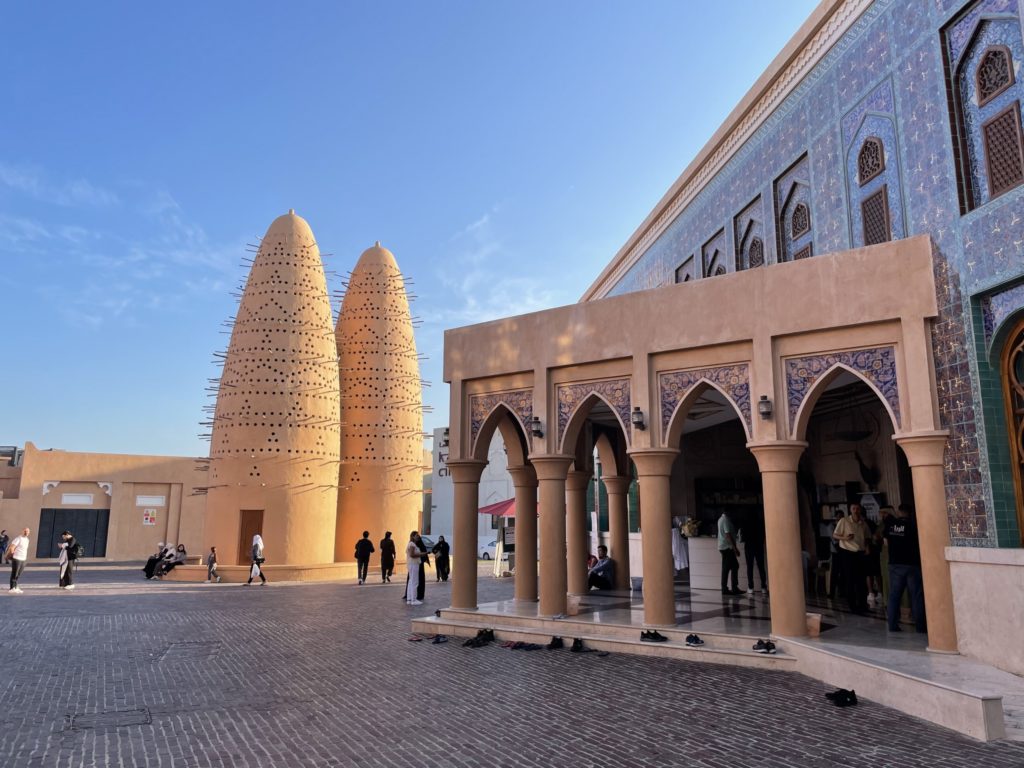
Another nice area for a walk, also with an old-fashioned charm but much less atmospheric, is the village of Katara. In the photo below, there is a mosque and two dovecotes (with protruding perches to make it convenient for doves to land). You might wonder why there is such respect for doves? Well, the Qataris collected natural fertilizer from them to enable some form of agriculture. What also amazed me was the internal ventilation system in the old houses, where thick walls and drafts created a comfortable atmosphere for living even in scorching heat. And all this without any electricity. Perhaps wealthy pearl merchants could afford such cleverly cool houses 200 years ago, but even at +32°C, it feels refreshingly cool inside. I can’t say how it would be at +45°C.
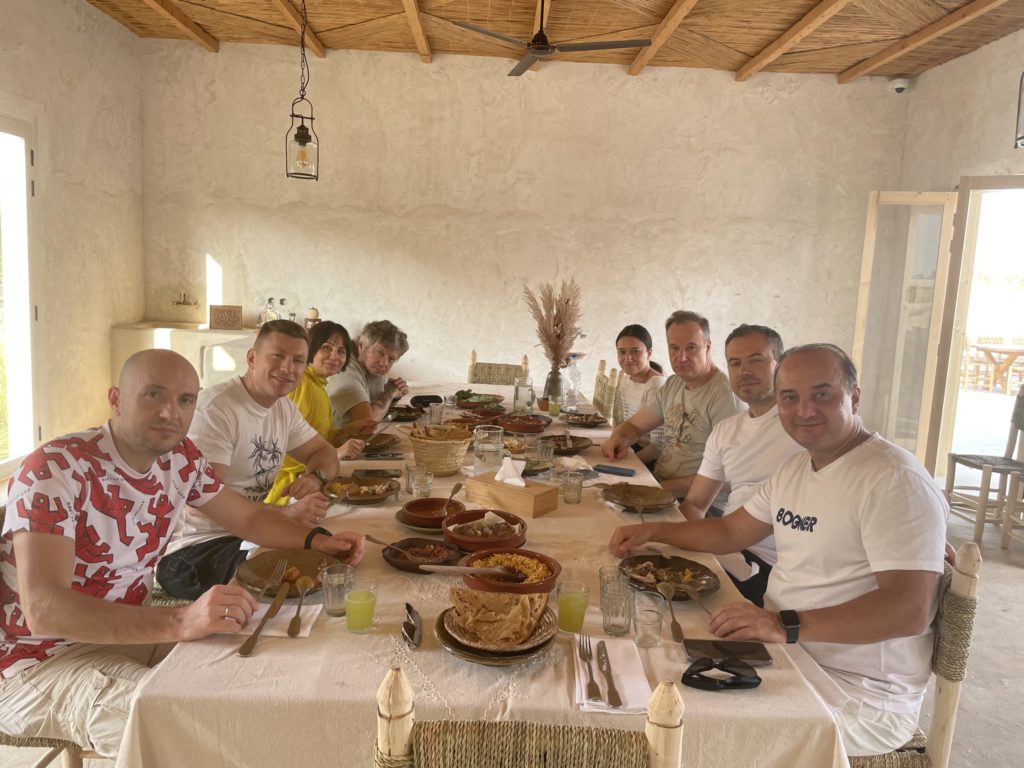
In Cappadocia, for example, they create special niches in the rocks with similar purposes for doves. Now, let me tell you a few words about agriculture, or rather, about the Heenat Salma Farm, an eco-farm. We went there on a tour and for lunch. I must say, it was the best meal in Qatar. The farm was founded by Fahad Al Attiyah, Qatar’s ambassador to the United Kingdom. The idea was to cook dishes using ingredients produced on the farm. During the championship days, they set up tables for groups of up to 600 people.
At the farm, they showed us everything and explained the concept of growing a wide variety of crops under challenging conditions using natural and ecological methods, thereby contributing to Qatar’s food security. It’s an entire philosophy, really. And what’s interesting is that they don’t use hydroponics or vertical farms. The senior agronomist, who was brought in from France, explained in detail and with expertise why growing in soil is more effective, and the produce turns out to be healthier and tastier. She believes that the entire assortment of crops can be grown even in poor soil and hot climates, and she demonstrates this belief with impressive yields.
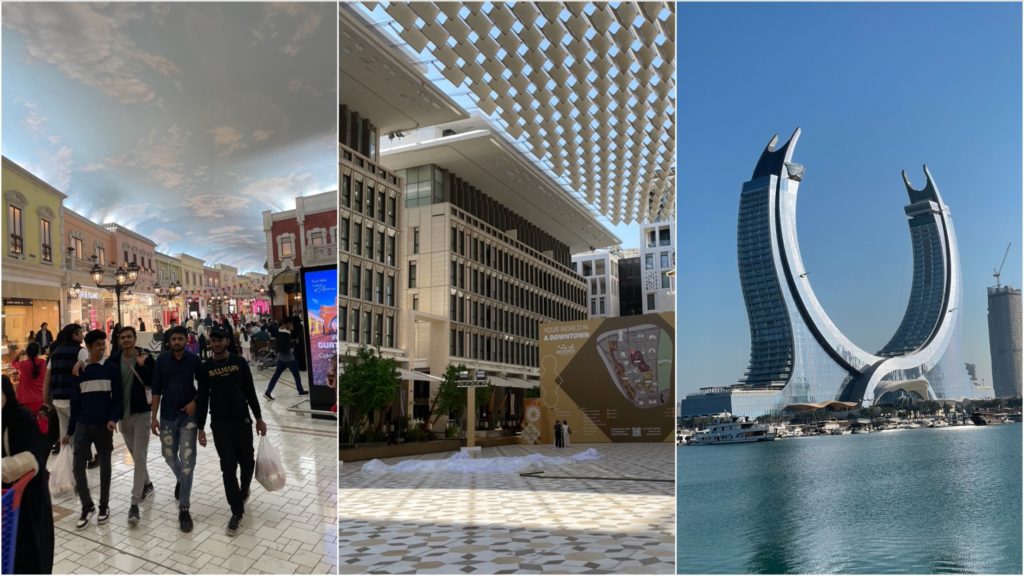
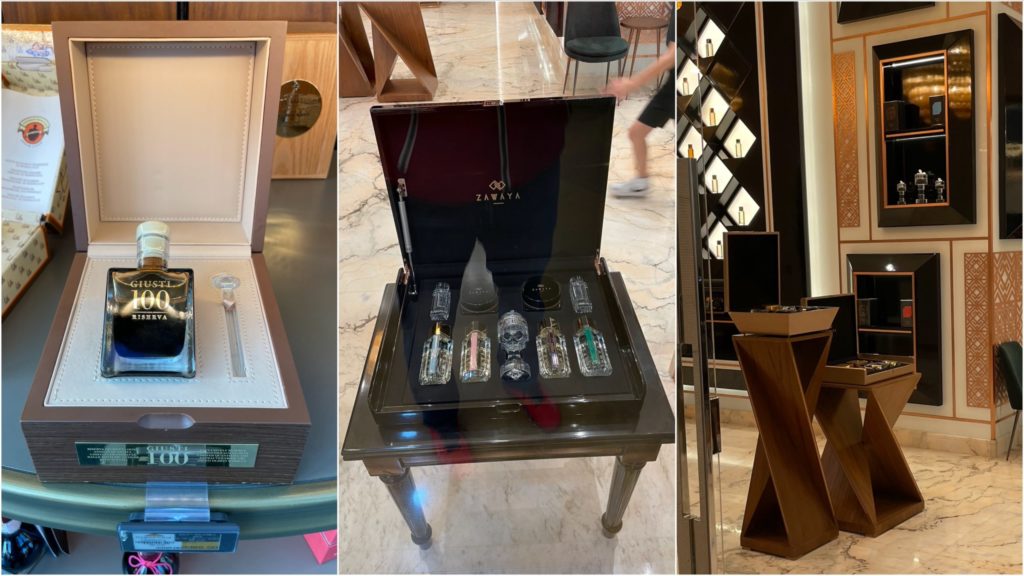
In Doha, there is a man-made island with a huge shopping center and city, almost everything is like in Dubai, just with a slight delay. Interestingly, in most areas of the city, alcohol is not sold at all. Not at all. However, we managed to have dinner at Burger & Lobster before the final, thanks to an invitation from Mikhail Zelman. Everything was great, but the only alcohol on the island was in the neighboring store, selling elite perfumes at $1000 for a 20-milliliter bottle. For some members of our group, it was the first football match in 30 years without alcohol. And it happened to be the final of the World Cup! 🙂
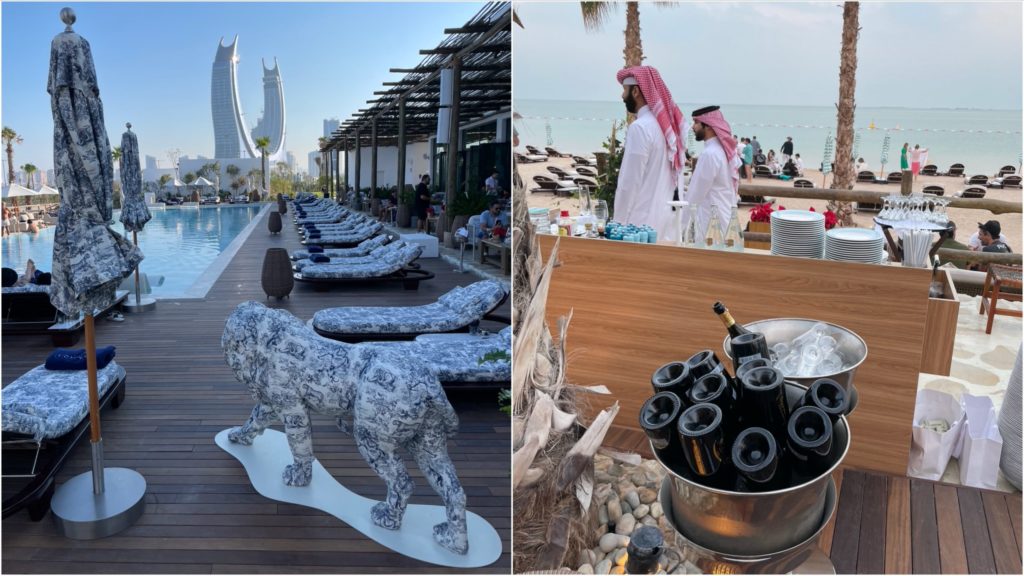
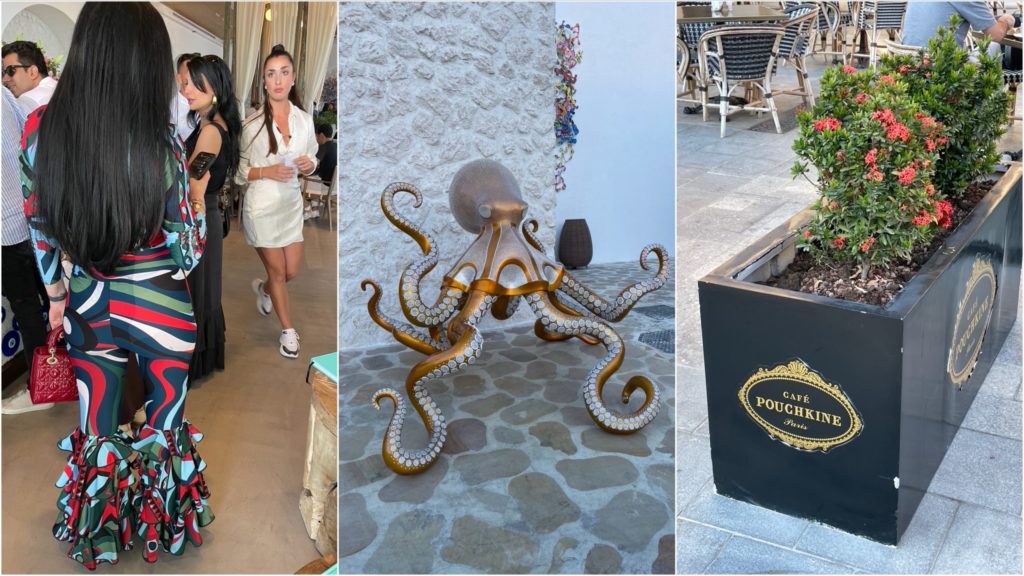
But there is also a little island of debauchery where anything goes: Al Maha, where you’ll find the most posh and expensive beach clubs and bars like Billionaire, Nammos, and so on. Here, you have everything we love: oceans of champagne, provocatively dressed beauties, and all that jazz. What’s interesting is that these beauties include women of Arab origin, whether they are locals or guests from more tolerant countries, it’s hard to tell.
Qatar, like other Gulf states, is a monarchy. What sets Qatar apart is that power is usually transferred not upon the death of the previous monarch but through a coup or abdication. The current Emir is only 41 years old and has been in power for 10 years. His father abdicated the throne, and his grandfather was deposed in a palace coup while the Emir was vacationing in Switzerland. Interestingly, the deposed Emir still had access to Qatar’s multi-billion-dollar fund and lived the life of a billionaire in exile while attempting to regain power.
Let’s talk about football. As I mentioned earlier, the football celebration was not really made for the fans but rather for the Emir and his friends, as well as for promoting the country globally. It’s hard to say how effective the PR ultimately turned out to be; perhaps some nuances will be forgotten, but the fact that the championship took place and the video footage of the celebration will remain. FIFA was heavily criticized for choosing Qatar, and there was a complex Qatar-French scheme involving the sponsorship of the Paris Saint-Germain (PSG) club (which eventually became the richest club in the world but didn’t win the Champions League), and the support for Michel Platini’s election as UEFA president. France and Qatar have deep economic ties, though they may not be apparent at first glance. Michel Platini was almost sent to prison on corruption charges related to Qatar’s selection, as the police detained and interrogated him for 15 hours. However, he managed to avoid punishment, and the same goes for Qatar.
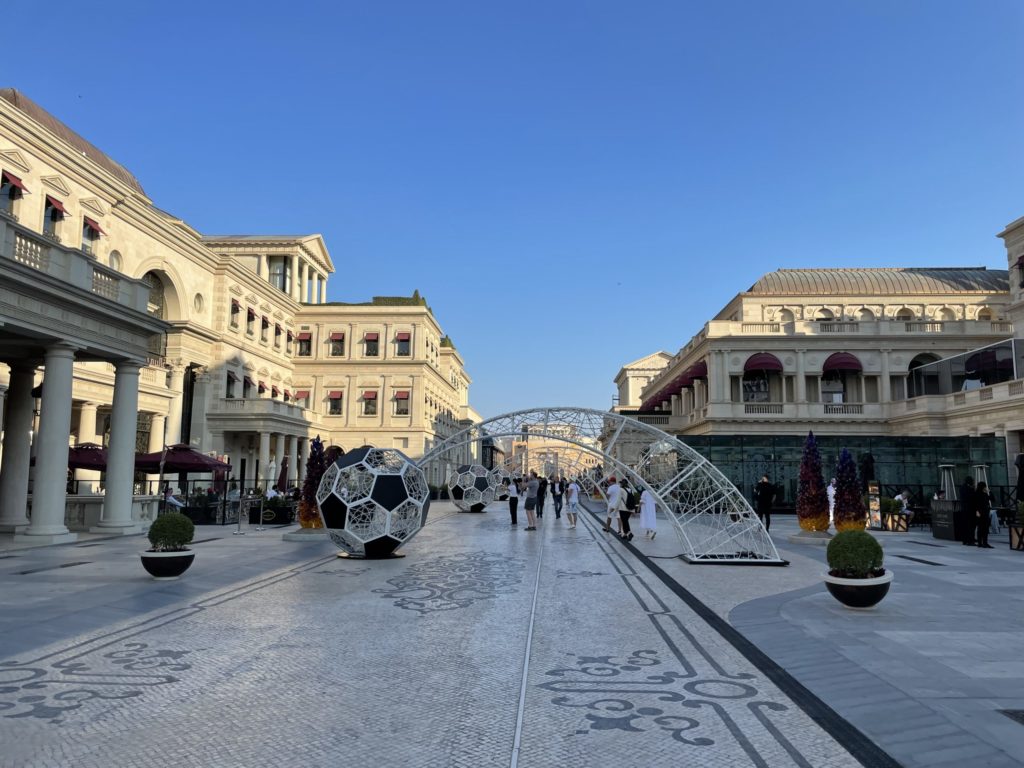
Qatar managed to outpace the rest of the Arab world and became the first to host the World Cup. In the Arab world, it’s believed that the number one goal in any large-scale endeavor, be it a construction project or any other initiative, is to create something unique and the biggest, coolest, or tallest, if not in the world, then at least in the Gulf region. It’s an endless race, somewhat senseless in my opinion. But what could be the purpose of power and wealth for those in control other than fame? I was told that the obsession with falcons or racehorses among young Arabs is deliberately encouraged, supposedly to let them compete in these national activities where success doesn’t solely depend on the thickness of one’s wallet, unlike buying oneself golden sports cars adorned with emeralds.
Our first visit to the semifinals at the main stadium, Lusail, almost ended in disaster. We left very early, hoping to enjoy all the benefits of the hospitality zone – after all, we paid a hefty sum for the tickets. However, all the entrances to the stadium were closed, and there was a massive traffic jam. In the end, we barely made it to the spectator parking lot, which was a 37-minute brisk walk away from the stadium. We barely had time for the match, and there was no time for hospitality. In the crowd of fans, there were several families with infants or young children (I don’t understand why they would bring them to a football match, but oh well). These parents were literally carrying their children on their backs, and the kids seemed overwhelmed by everything happening around them. On the way back, the same 37-minute walk and traffic jams. For the second semifinal and especially the final, we prepared better. We warned the driver that we would have to drive on the opposite lane and shoulder (like all the savvy folks around), we arranged for a pass to the VIP parking lot (just a 15-minute walk!), and we developed alternative routes to approach the stadiums, which made things much smoother. Still, it was nowhere near as convenient as any match in 2018.
A “knowledgeable” person had advised us to take the metro to Lusail for the final. Later, this same person said that they spent 3 hours waiting in line to enter the metro after the match, and there was no physical possibility to exit the crowd and find an alternative route. In contrast, we spent only an hour and a half in a comfortable minibus stuck in traffic in Doha.
Inside the stadium, once you made it there, everything was more or less fine. There was a thorough security check, and all bags had to be stored in lockers. They even confiscated lighters from people, for instance. However, they didn’t prohibit smoking around the stadium – how could they in the Arab world, where smoking is so common?! I intentionally went to see how they handled this situation, and it turned out they had special lighters chained to designated smoking areas!
By the way, the hospitality zones were top-notch, with great food and atmosphere. The only downside was that due to the need to serve alcohol, they were located outside the stadium, and it was not possible to reach them during the halftime break.
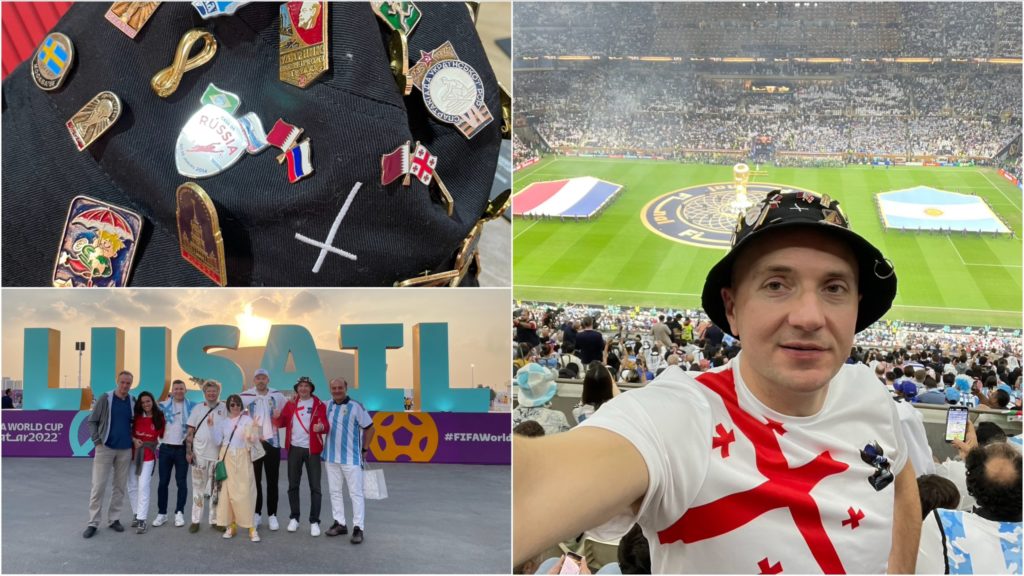
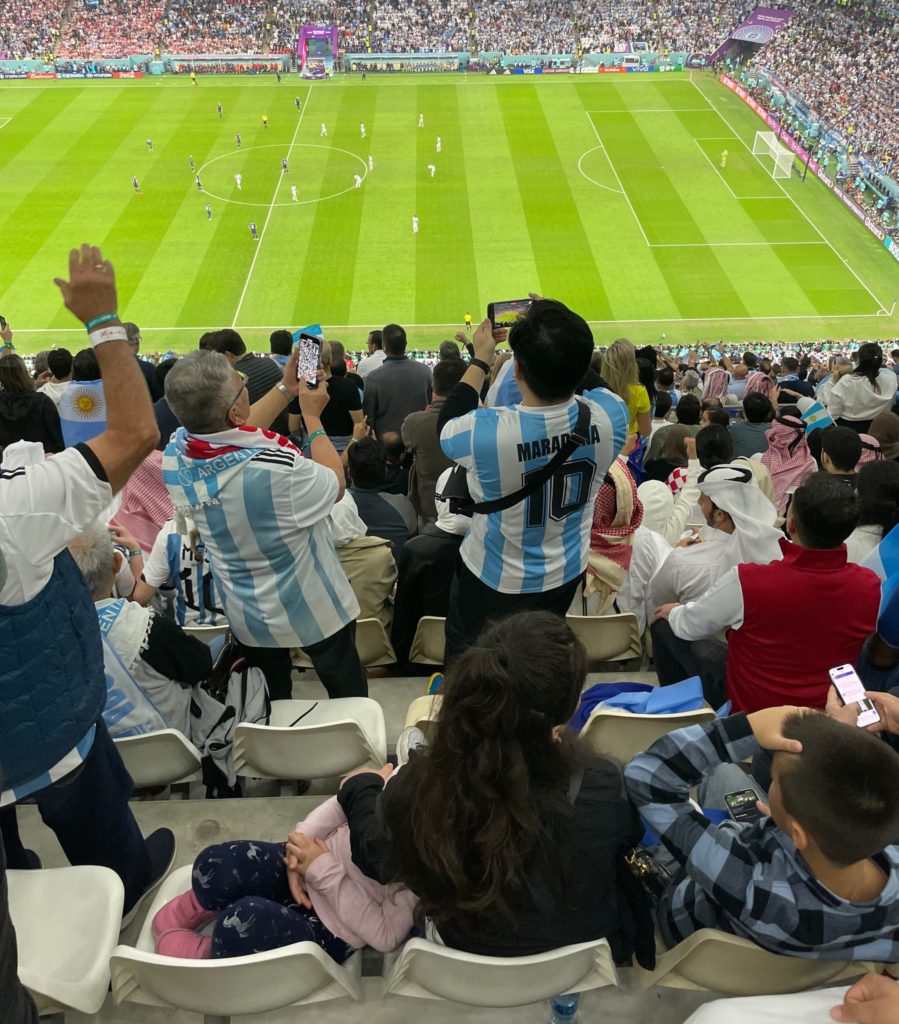
Starting from my arrival at the World Cup, which was during the first semifinal, everyone in Qatar was cheering for only two teams – Morocco or Argentina. Let me remind you that Croatia and France also made it to the semifinals. Generally, there were very few fans who came from Europe. The entire Muslim world was rooting for their own, particularly Morocco. The Qatari national team didn’t seem to be considered much by the Qataris themselves, in my opinion. On the other hand, Argentina was a universal favorite, mainly due to Messi, but overall, the rest of the world tends to support a team from Latin America rather than one from Europe. I don’t know if Brazil would have posed competition for support had they reached the semifinals, but I doubt it. The phenomenon of Messi was challenging to surpass.
In Qatar, souvenir shops were found at every step. However, finding an Argentina jersey was practically impossible anywhere, and the day before the match, both Morocco jerseys and the most popular championship souvenirs were sold out. On the other hand, around half of every store was filled with Qatar national team souvenirs, but I never saw anyone buying them.
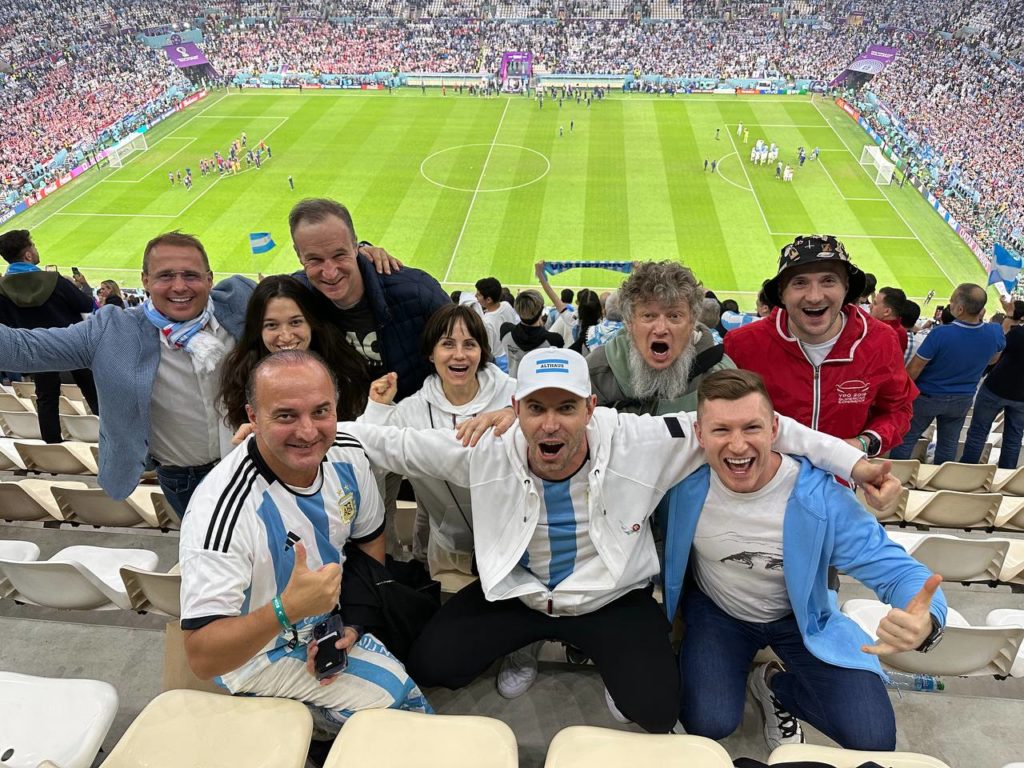
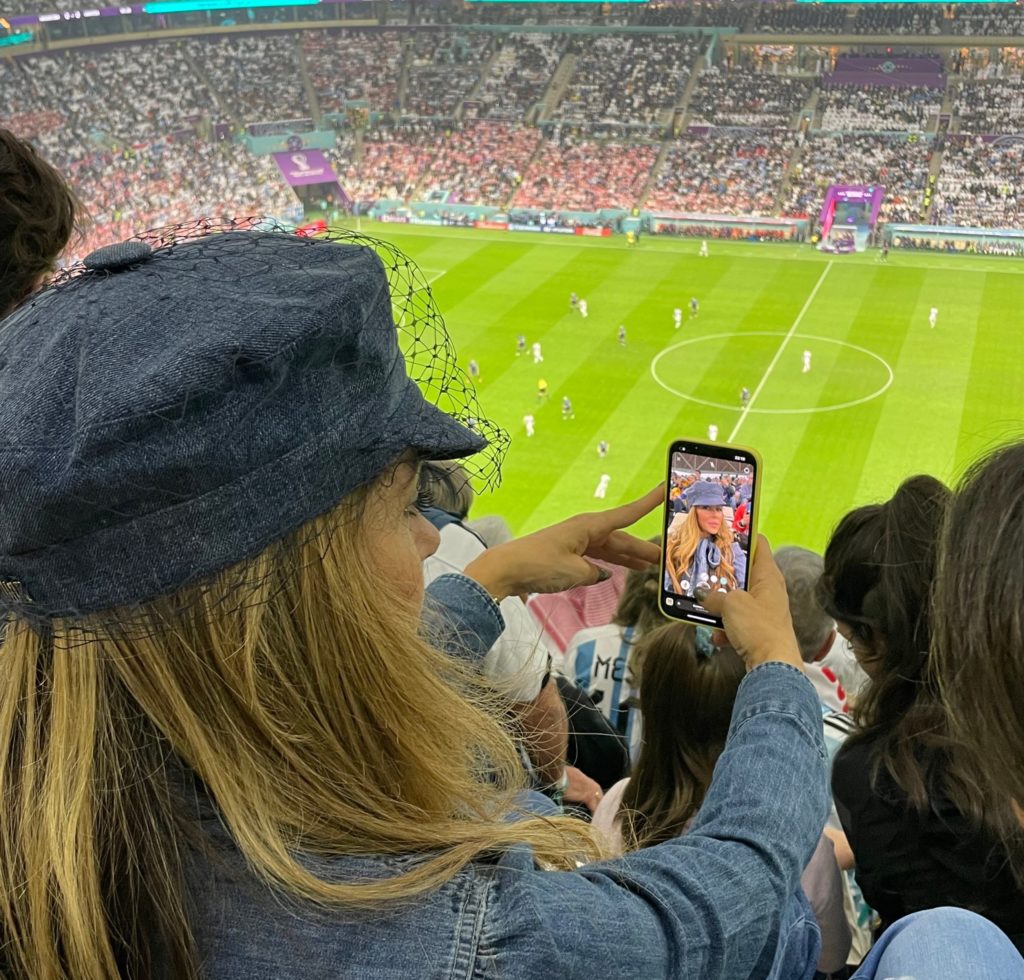
At every match, I entertained myself by observing all sorts of strange fans – both men and women. There were sleeping young children, girls, and women who didn’t take their eyes off their phones or Instagram for the entire match, even during the final! Well, maybe they glanced at the opening ceremony and when Messi lifted the trophy. The lady in the photo below was from Israel, constantly messaging someone, probably boasting about attending a match in a Muslim country. There were many Arabs at the matches too, who seemed to have come more to show off than to watch football. There weren’t that many true football fans, mainly due to the restrictive measures implemented by Qatar, but there were enough of them, especially since in all three of my matches, Argentina or Morocco were playing. Both teams had passionate supporters who created a vibrant atmosphere. I believe there were about a couple of thousand French and Croatian fans at their matches, as far as I understood. However, Argentina had nearly 30 thousand fans who were willing to fly to an unknown destination and spend their last penny to support their national team!
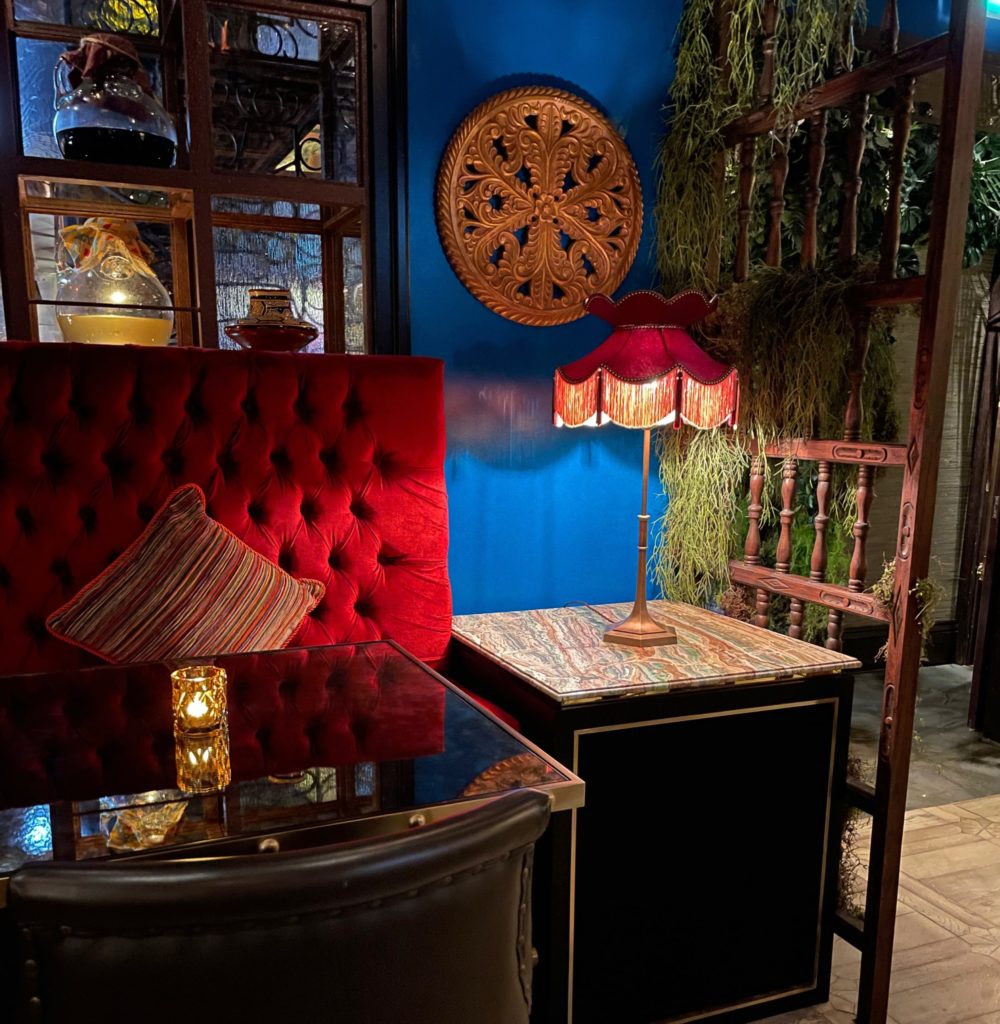
As for the evening and night entertainment, all the horror stories about booking two months in advance with prepayment turned out to be nonsense. Even restaurants could easily be booked the night before, even for a group of 10 people. Our favorite restaurant in Doha was the Peruvian Coya, located in the W Hotel, and it was fantastic.
Lastly, it must be said that the incredible $220 billion budget of Qatar for the championship, compared to other countries spending usually $5-10 billion, wasn’t the worst idea to spend the money. In reality, only about 10% of this budget was allocated to football, while the rest was used to build three new city districts with state-of-the-art technology, upgrade the airport, and other infrastructure. Yes, they will have to demolish a dozen hotels and several stadiums that are simply not needed. The furniture from the hospitality centers will also be disposed of. They tried to sell it at 10% of the cost, but no one bought it because logistics are expensive these days. However, Qatar’s overall advertising campaign was vivid. Anyone who visited Qatar, despite the negatives, saw excellent restaurants, hotels, and beautiful city districts. For those with enough money, Qatar is quite an interesting place to visit for 2-3 days.
Moreover, you can even buy cologne and even balsamic vinegar for about the weight of gold. How about 100 grams of vinegar for $2000? Or 20 ml of men’s cologne for $3000? In Dubai, I visited a perfume museum, which was opened by the current ruler of Dubai’s aunt. I highly recommend visiting this museum to understand what scents mean to Arabs. The tradition of perfuming guests has existed for over 3000 years, and agarwood and oud oil have always been more valuable than gold. Scents are still highly valued, and locals prefer local fragrances. In the museum, you can smell all of them and even mix your own fragrance.
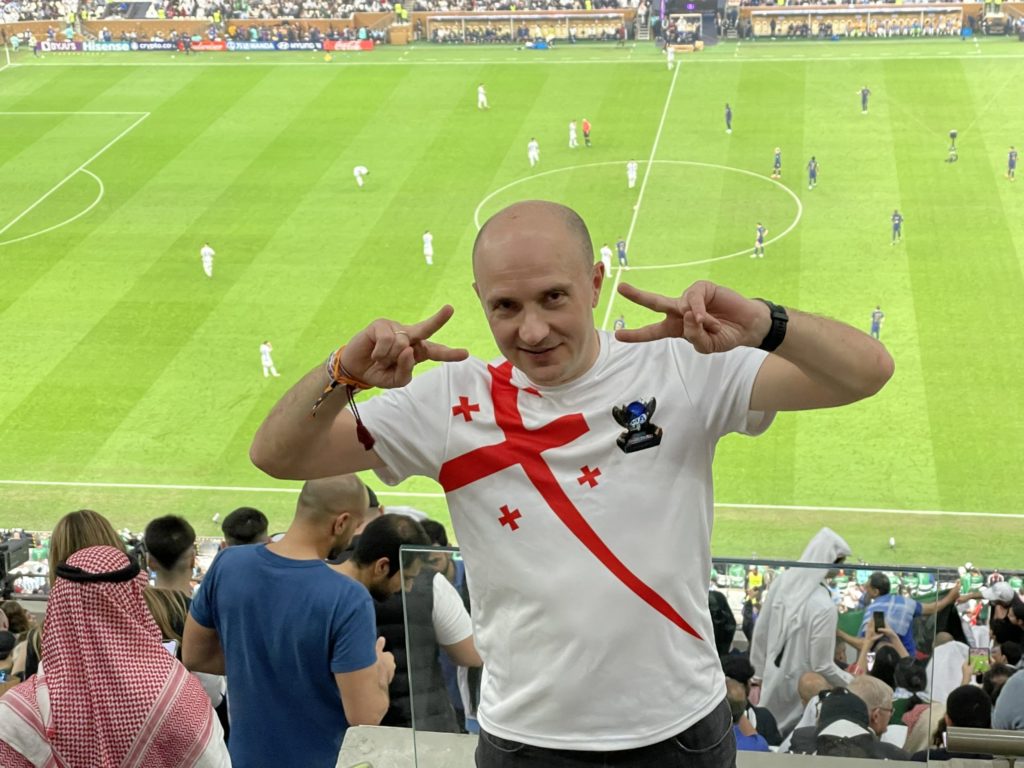
In the end, I absolutely don’t regret going to the World Cup in Qatar. It was filled with vivid emotions and unexpected experiences. The true highlight was the final itself, with an incredible comeback from France, ending 2-2 after regular time, then 3-3, and finally a penalty shootout. The night before the match, we discussed the not-so-thrilling semifinals and fantasized about what we would ideally like from the final. One of us said, “3-3 and a penalty shootout!” He received some objections, arguing that “in a final, teams are usually more cautious, and rarely do we witness an open game, as so much is at stake.” To be fair, up until the 70th minute, the game was quite dull, but then, everything changed!
The end!