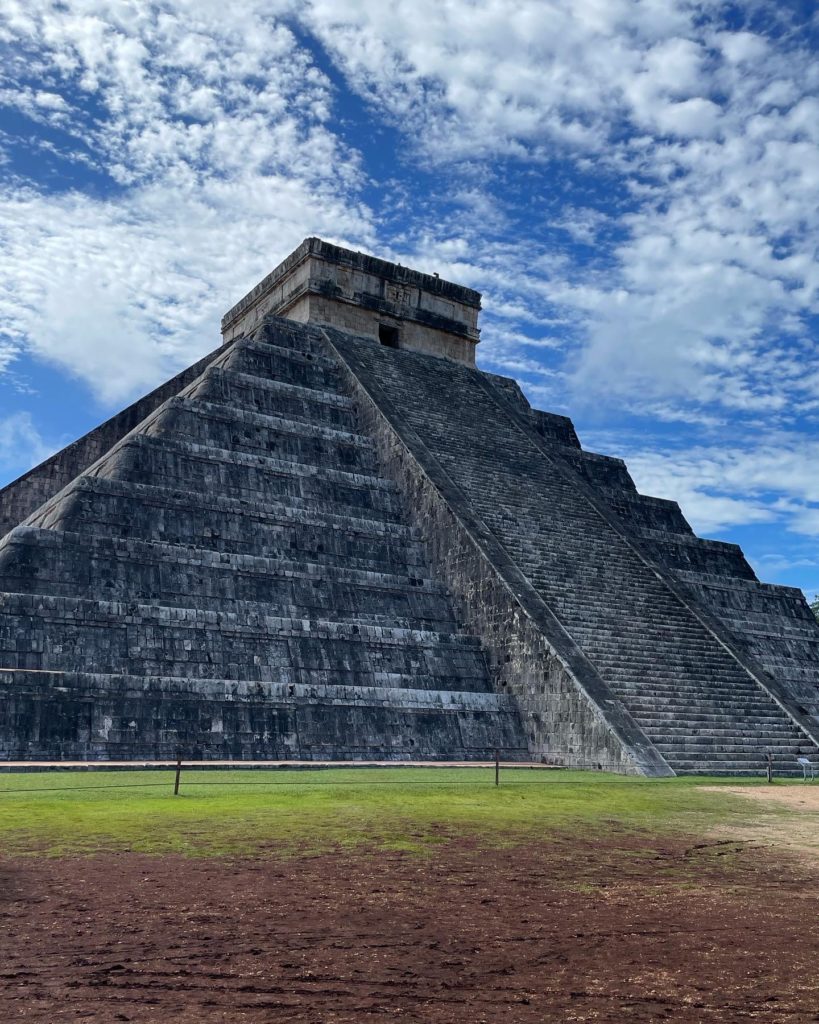
A recent inDrive board meeting took place in Mexico, and required in-person attendance. Seizing the opportunity to combine business with pleasure, – I brought my family.As a result, my second trip to Mexico, aside from business, was filled with exploring the rich history and culture of the country. Here are the highlights and insights from an unforgettable, eye-opening trip.
Mexico City stands on the site of the ancient Aztec city of Tenochtitlan, more precisely, on Altepetl. Altepetl is a city-state, and one can draw a distant parallel with the cities of ancient Greece. The ancient Maya, Aztecs, and other Mesoamerican tribes also lived in cities, not countries. The Aztecs arrived at Lake Texcoco (present-day Mexico City) from the north. The Aztecs themselves called themselves Mexica, hence the name Mexico and Mexico City. The Aztecs were considered to be vulnerable and underpowered, so they settled on two islands in the lake under the protection of more developed and resourceful cities.. Their secure location, combined with superior agricultural skills, led to the strengthening and growth of the Aztec population..
However, the foundation of their ideology – a sacred belief that the sun shines as long as blood flows – resulted in ritual human sacrifices, proving endless wars, under the impression that by waging bloody wars, they were appeasing the gods and saving the world.
They did not have ambitions to conquer new territories; their only goal was to capture prisoners for sacrifices – or “flower people” – hence the naming of the “Flower War”.
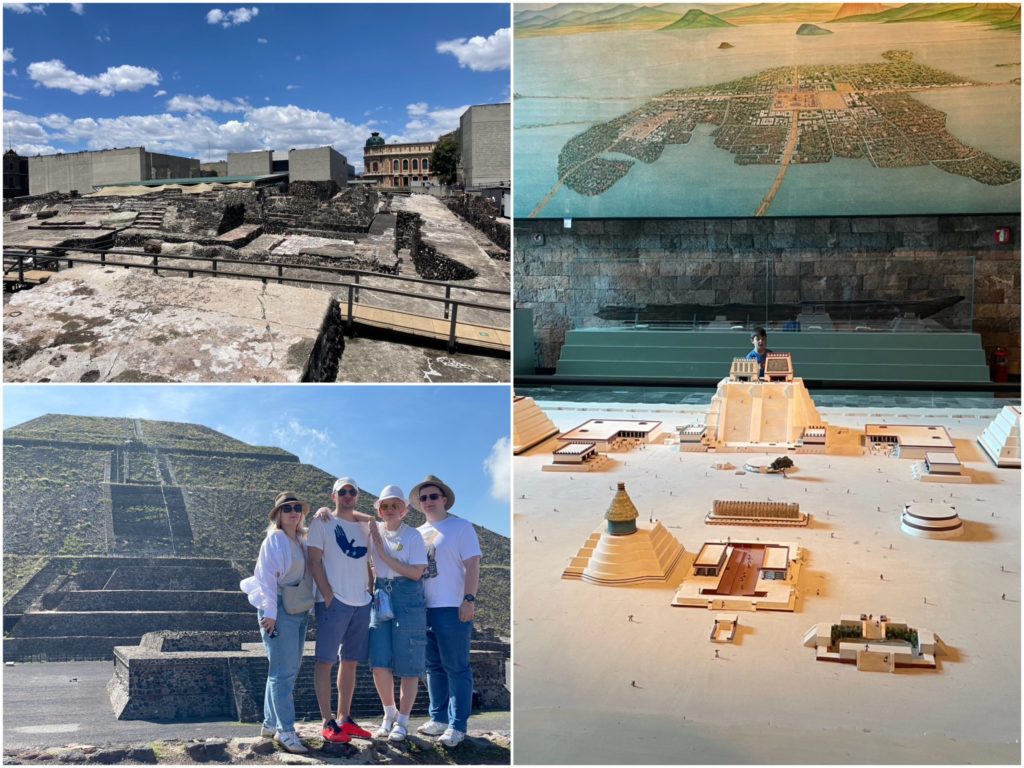
Within the city-state itself, there were between 200,000 and 1 million residents at the peak of the metropolis during the 14th to 16th centuries. It is impossible to accurately estimate the number of people sacrificed over these 200 years, but the most commonly cited conservative estimate is 136,000 individuals. There were numerous methods of sacrifice, including a “festival of flaying people alive.” Sacrifices were not limited to prisoners and slaves; even their own citizens were offered as sacrifices. This was considered an honorable death, and people often preferred to be sacrificed, ensuring their guaranteed ascent to the gods. If twins were born, one was offered as a sacrifice (usually the ‘luckier’ one), while the other led a mundane and arduous worldly life. Every year, they sacrificed the most beautiful young man in the community, and the competition for this honor was incredibly intense. At no more than18 years old, this individual would be chosen, and given a year to live the life of a deity – with many servants, four beautiful concubines, people bowing to their every whim, and the high priests at their beck and call.
However, just before the sacrificial offering, everything changes. The sacrifice must expel the god Huitzilopochtli, who has supposedly possessed them, which requires everyone to curse and humiliate them to drive the god out, shortly before killing them.
In general, there were many gods, and each one required particularly bloody rituals. On the main square of Tenochtitlan, there was a special platform called “Tzompantli”, which was used for displaying 1,500 skulls, with the aim to keep the platform fully stocked, and with a regular rotation of new additions to the collection.
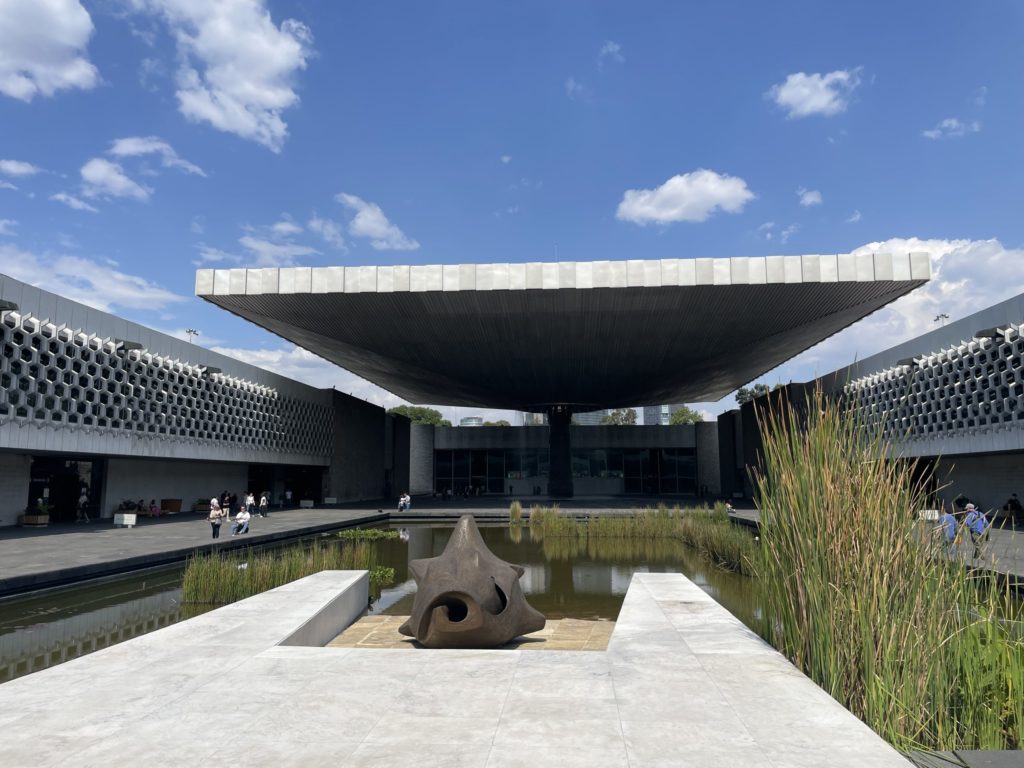
The Anthropology Museum in Mexico City is magnificent and a must-visit! There, you can find the Aztec calendar in the form of the Sun Stone, a reconstruction of the Palenque mausoleum, which was discovered not too long ago in remarkably good condition in the Mayan city of Palenque. This adds a strong argument to the notion that the Maya were ancient Egyptians who sailed to America; there are already many similarities in their rituals and structures.
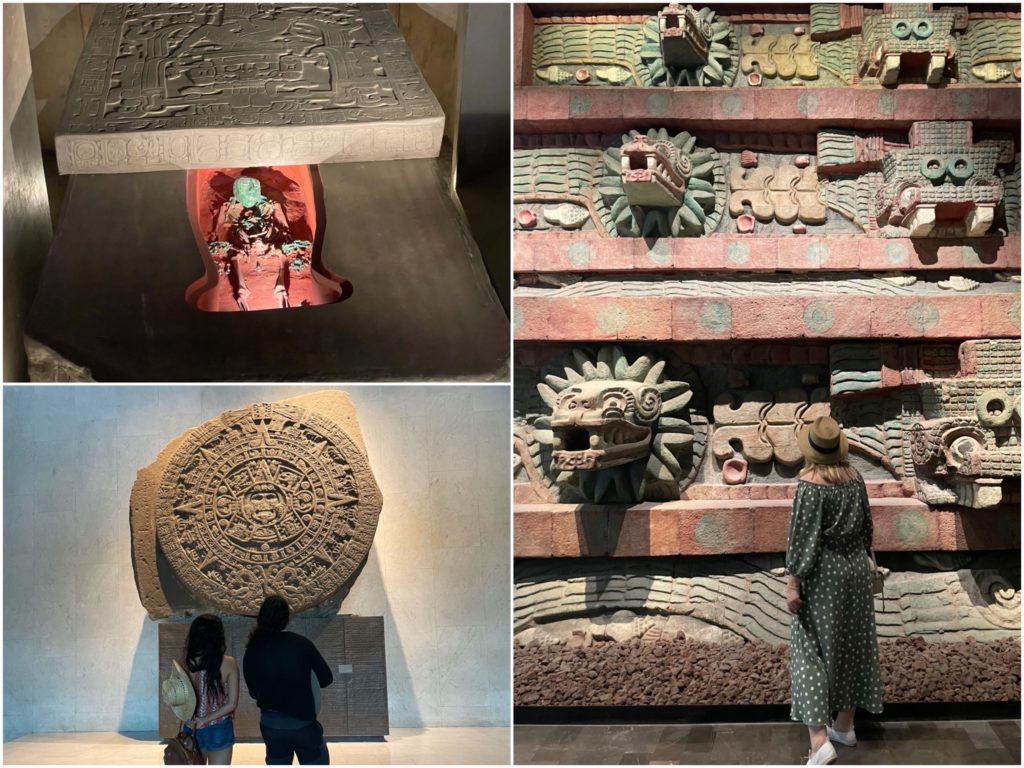
Ancient American civilizations are an endless source of fascinating knowledge. I am sure I will continue to study the Aztecs, Maya, Olmecs, and dozens of other civilizations whose names are yet to be discovered. The city of Teotihuacan is particularly impressive. The city was founded in the 3rd century BCE, and by the 2nd century CE already had a population of 125,000 people—only slightly smaller than Rome during the same period! Interestingly, the Teotihuacanos were very peaceful and hardly engaged in warfare, focusing instead on trade. Then they disappeared around the 7th century. There is very little information available about these ancient peoples, as only the Maya left behind any form of writing, and even this was deciphered relatively recently by the Russian scholar Yuri Knorozov. The Teotihuacanos had a very primitive proto-writing system, likely for recording trade transactions.
What else surprised me? Of course, the architectural marvels, such as Chichen Itza with its Mayan calendar-inspired features, various audio and visual special effects, and ball game ollamaliztli. It’s just a game, but the ancient “stadiums” for playing it, like the one in Chichen Itza, are fascinating. The walls’ angles are precisely carved to make the ball bounce correctly, and you can speak in a whisper from the ruler’s stand all the way to the playing field 70 meters away, and be heard perfectly. Truly, wonders abound!
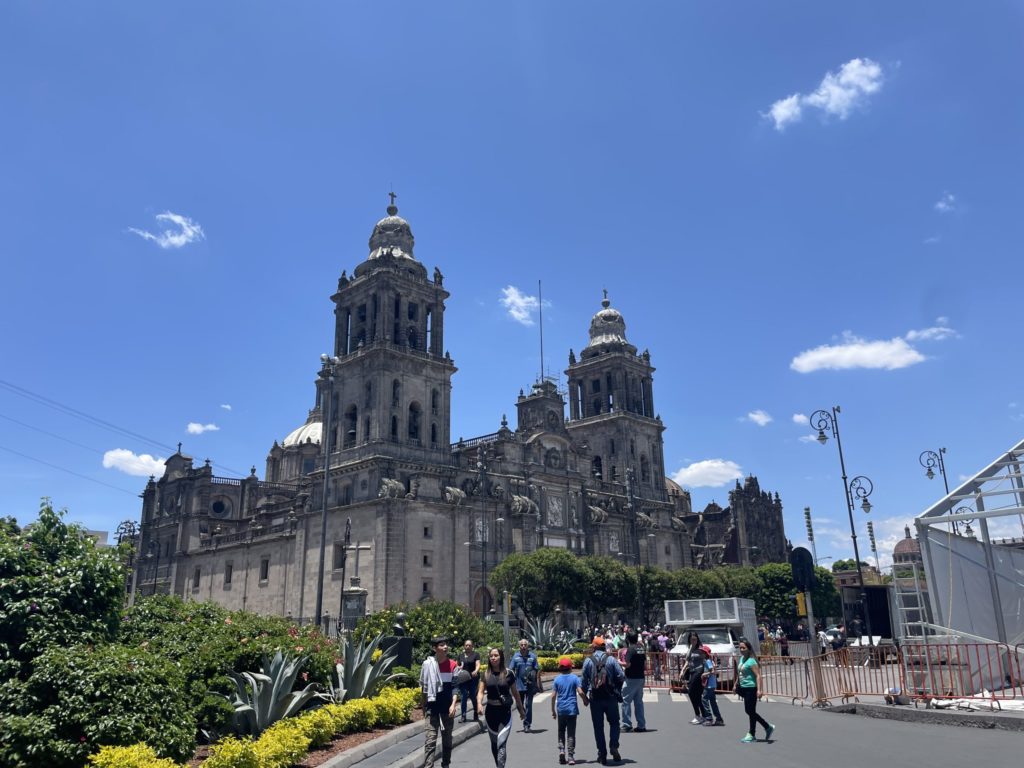
The Maya are my idols in general—I’ll have to visit Guatemala and the northern part of Mexico to study them further. They invented chocolate atl, a sweet cocoa-based beverage. I really liked the tradition of noble Mayans’ feasts. They and many other ancient Mesoamerican peoples drank a lightly alcoholic beverage made from fermented agave called pulque. It was a rather expensive drink that not everyone could afford, and it was the only alcoholic drink available in pre-Columbian America. The peculiarity of pulque is that you can’t drink too much of it; it bloats the stomach. However, the priests needed to drink it often and in large quantities for “divination.” So, they invented an alternative method—enemas. In the museum, you can see enema devices and installations with reclining priests, presumably engaging in philosophical conversations about the meaning of life, with servants holding voluminous enema equipment behind them.
The question of the inhabitation of the Americas is also intriguing. Scientists believe that people initially crossed from Eurasia to America through the Bering land bridge, and that some of them later returned. The mythology of the Maya is remarkably similar to that of the Sakha people in Yakutia and even features the same tree of life, concept of three worlds, as well as similarities in shamanism and the stone temazcal (steam bath). There are many shared words in their languages.
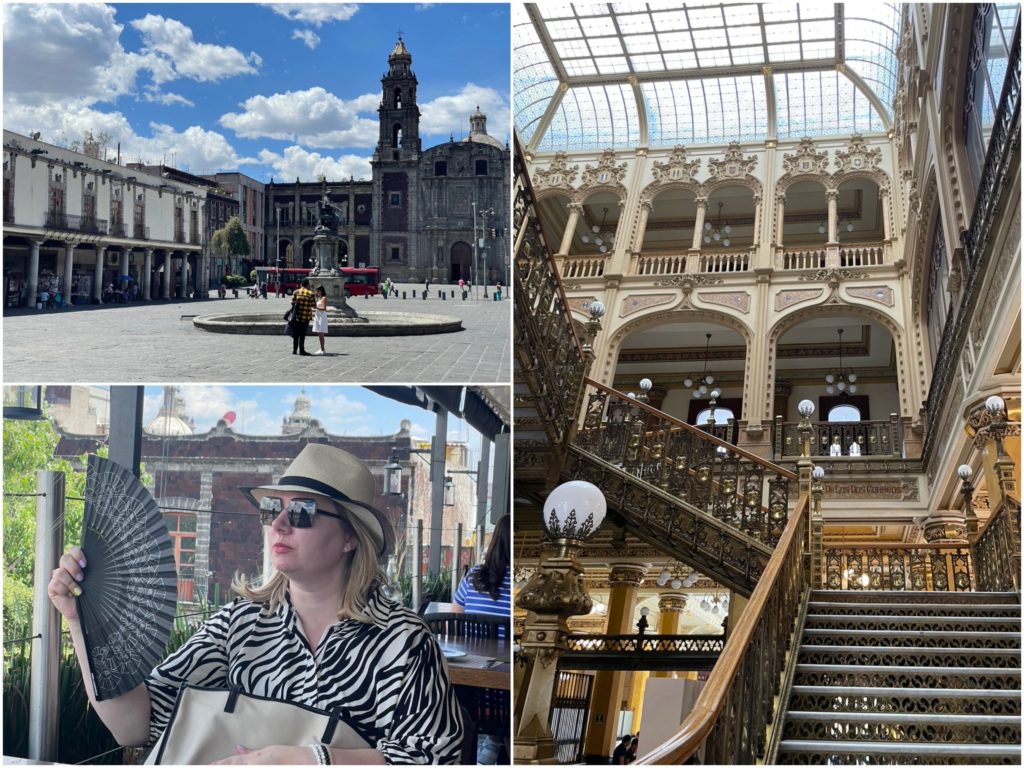
The conquest of Mexico by Cortes is a separate and – from the perspective of the Mexicans – rather tragic episode in history. In brief, small groups of conquistadors were aided primarily by the epidemics they brought with them. Secondly, there was Jesuit treachery and cruelty as they pitted tribes against each other, deceived without hesitation, and so on. Only in the third place did more advanced weaponry and the frightening presence of horses, terrifying for the locals, play a role. By the way, there were horses in America, as well as giant ground sloths, standing about 6 meters tall. However, all large animals disappeared (were exterminated) a few hundred years after humans arrived. Who knows, maybe it was a pivotal point in evolution or a mistake.
Modern Mexicans mostly consider themselves descendants of the Aztecs, although there are, of course, various ethnic groups present in the country, from purely white descendants of Spaniards who live mainly in cities, to rural indigenous people, and those in between.
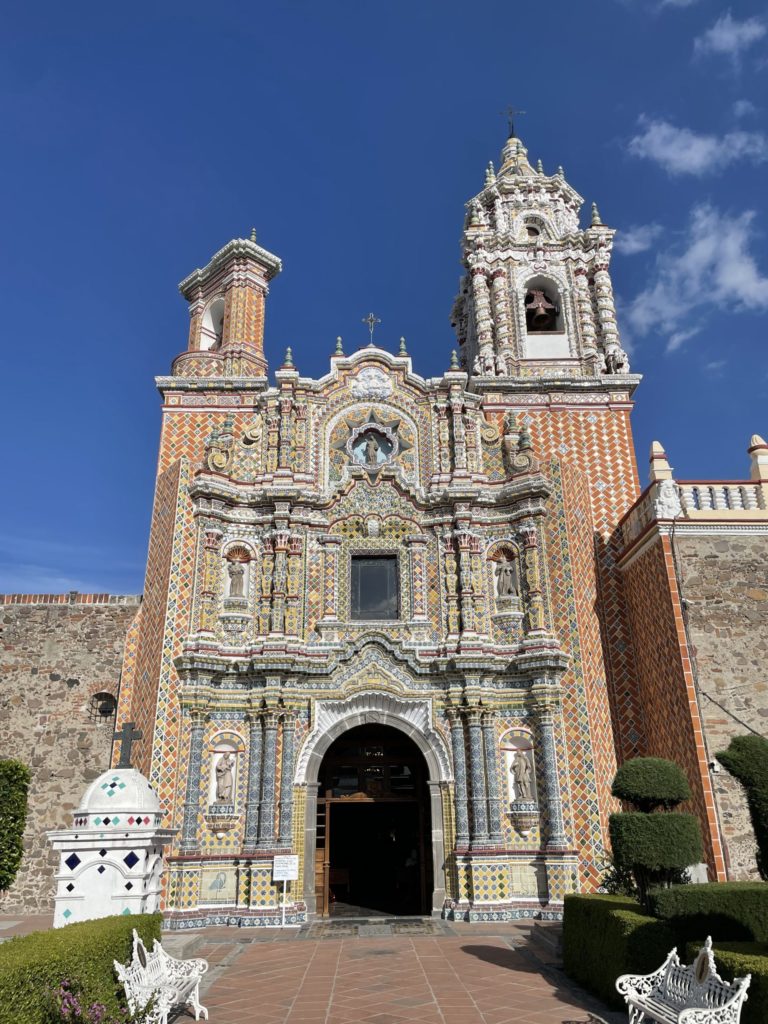
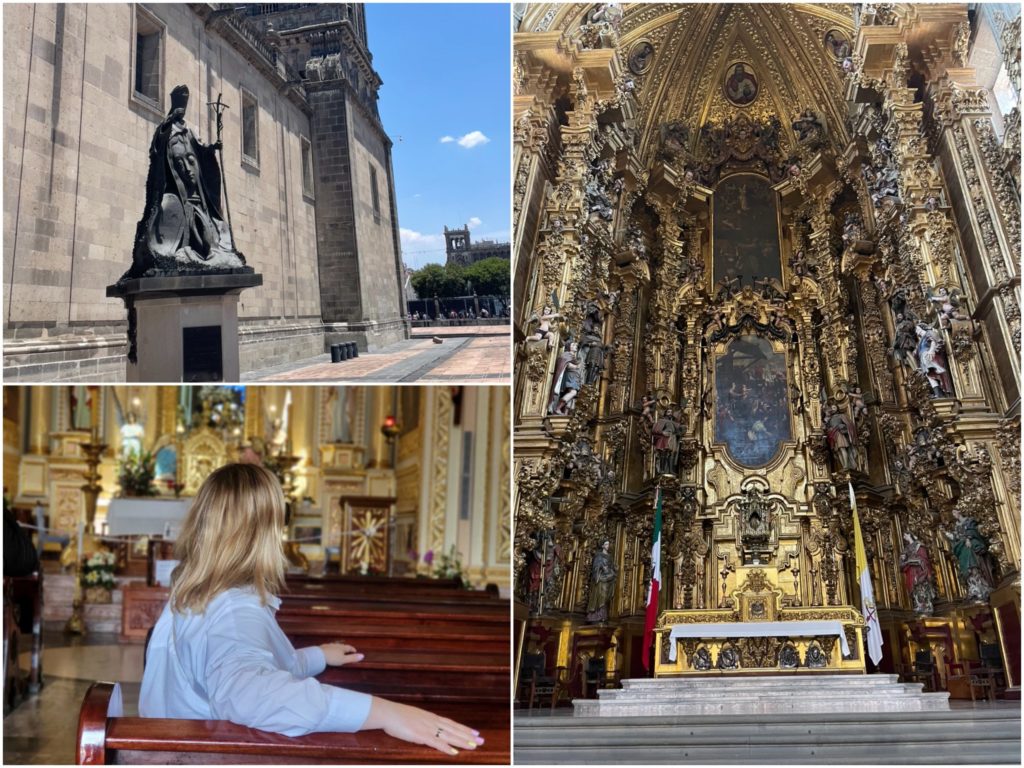
Mexico is also quite a religious country. Pope John Paul II is very popular there thanks to canonizing several indigenous people, and even has a public monument dedicated in his honor. The monument, which is a sculpture of the pope, features a cloak made out of 5 million bronze keys that were donated by locals in the wake of a campaign called “. “Send a Key to Your Heart!”
Mexico’s relationship with both Spain and the United States is quite complex. On the one hand, the United States, as its primary trading partner and home of a large Mexican immigrant diaspora, is seen as a promised land. On the other hand, Mexican authorities have a somewhat oppositional and independent stance toward the US, which surprised me slightly. As for Spain, there are cultural connections, but not as many economic ones. Instead, Mexico maintains close ties with other Latin American countries that strive to maintain friendly relations with each other.
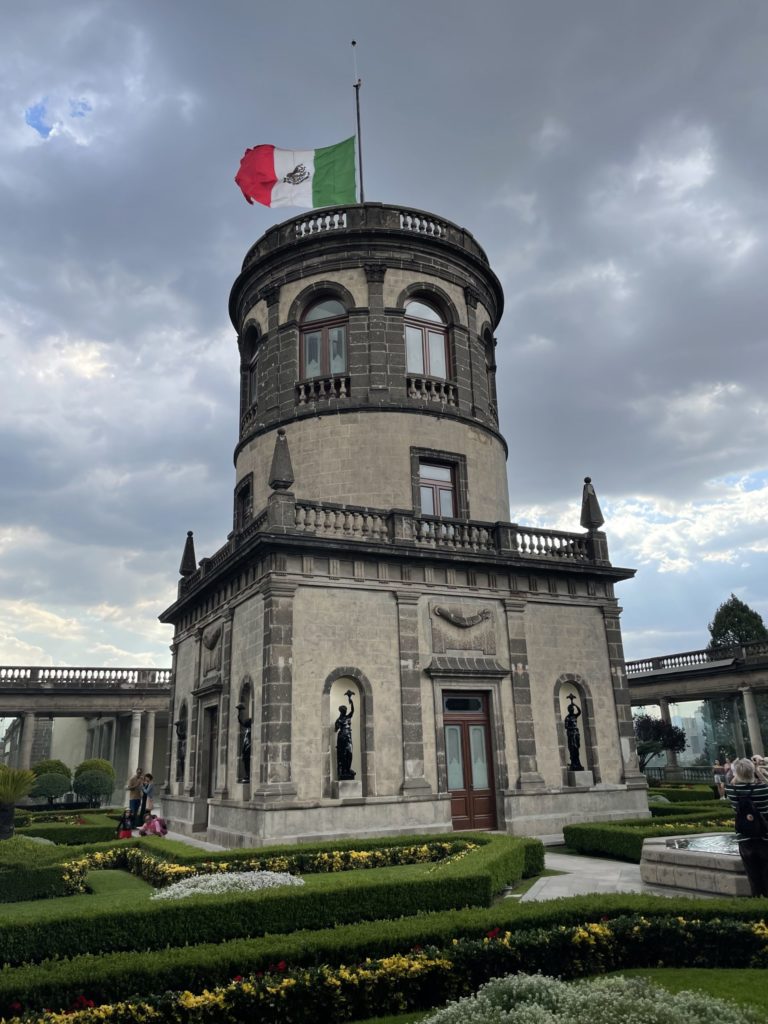
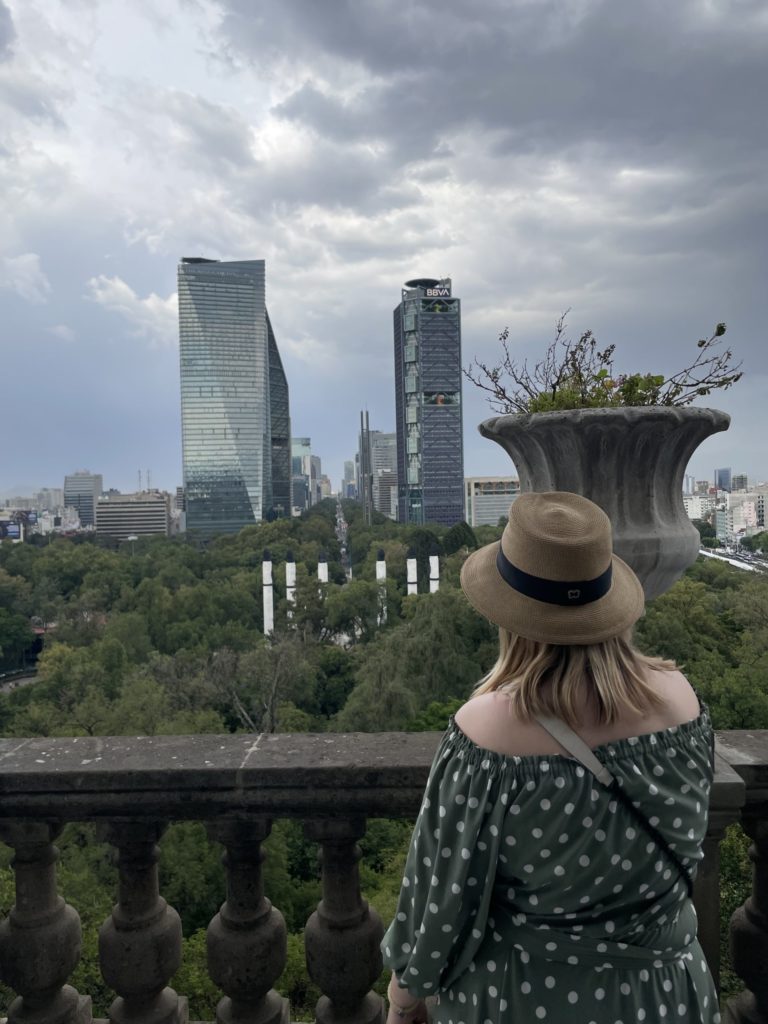
The most famous battle of the Americans for Mexico was the storming of Chapultepec Palace. It’s not a fortress at all but rather a classic palace in the style of Peterhof, situated on a hill. The most poignant episode occurred when the Mexican general ordered a retreat. Six cadets refused to obey the order and barricaded themselves in the central tower. They were all killed, with the last one wrapping himself in the Mexican flag and jumping from the tower. He died from the fall. The six white columns (shown in the photo below) are a memorial to these cadets and are called the “Child Heroes.” In the background, you can see Mexico City’s main business street, Reforma Avenue.
By the way, when the American flag was raised on the palace’s tower, 30 surviving soldiers from Saint Patrick’s Battalion – Irishmen who had previously deserted the U.S. army and joined the Mexicans– were hanged with their faces turned towards the flag. It was like saying, “Not only will you die, but you will also live to see the triumph of your hated Uncle Sam.”
Chapultepec Castle later became the residence of Emperor Maximilian of Mexico, a notable Austrian who was placed on the “throne” with the support of Napoleon III. He only lasted three years and was executed. Porfirio Díaz, a mestizo Indian, lived in this castle for quite some time. He served as the President of Mexico three times in the late 19th and early 20th centuries. He is remembered for putting a lot of effort into lightening his skin tone. In commemorative paintings, he appears entirely white, and according to eyewitness accounts, was very successful in this endeavor over the years.
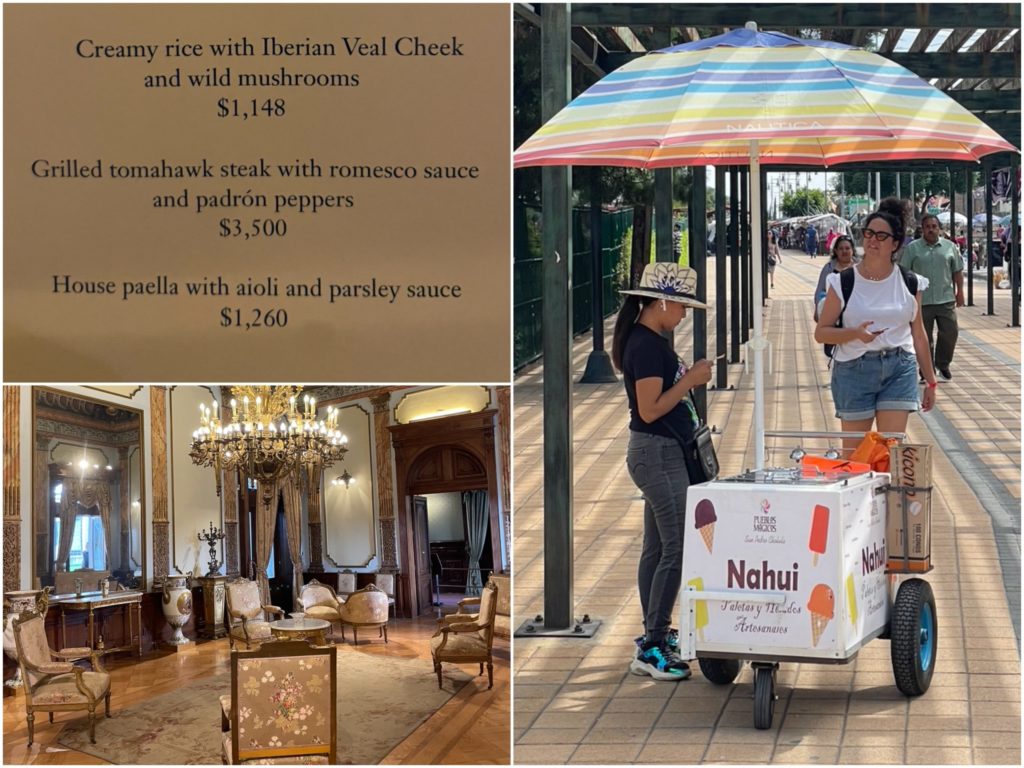
When you open the menu in a restaurant in Mexico, you might be initially surprised. In reality, the “$” sign represents many Latin American currencies. This is because the “$” sign is nothing more than a combined abbreviation for “PeSo.” In general, steaks aren’t as expensive as they might initially appear to you. But if the price tag of $3500 next to a steak still scares you, you can always go out on the street and have ice cream. It’s much cheaper!
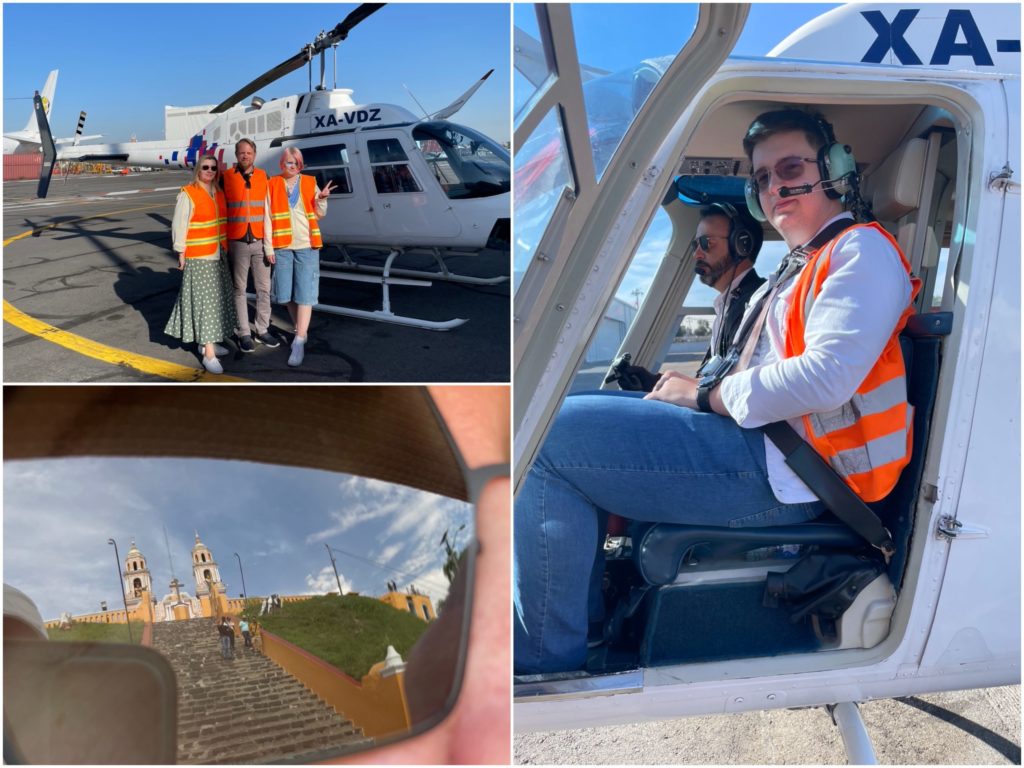
Helicopter transportation is highly developed in Mexico City; there are helipads on almost every skyscraper in the city center. I highly recommend taking a helicopter ride over the city. The city has a varied topography with many monumental structures, and you’ll get a thrilling ride between the buildings with gusts of wind and turns, passing stadiums, and even the Formula 1 track! We all really enjoyed it.
In Mexico City, there are several excellent and completely safe neighborhoods to walk around. Paseo de la Reforma is the city’s business center and home to the best hotels. The wealthy live near the park and the hill of Chapultepec Castle in an area called Lomas. For shopping, it’s best to head to the Polanco shopping district. The bohemian district is Coyoacán, where the famous Frida Kahlo Museum is located. Frida Kahlo is a popular Mexican artist and a symbol of feminism. She was the wife of the equally famous communist Diego Rivera and a friend of the immigrant Trotsky. The museum itself is quite charming, but I was more interested in it as the home of the prosperous Mexican bohemian community of the early 20th century.
The authorities flirted with the communists, and the communists were the trendiest bohemians in Mexico City in the 1930s. Frida Kahlo’s husband, Diego Rivera, was a fascinating character. He was an artist and a prominent communist, initially, then expelled from the party for supporting Trotsky (he arranged Trotsky’s arrival in Mexico). After the war, he returned to the Communist Party and even traveled to the USSR in 1956 for cancer treatment. He died in 1957. His major work was supposed to be a huge fresco in New York’s Rockefeller Center, a group of skyscrapers that Nelson Rockefeller’s grandson began building in 1933. The theme of the fresco was “Man at the Crossroads,” and Rivera seemed to juxtapose capitalism and communism in it. He depicted Lenin on this fresco, and Rockefeller demanded his image be removed because he found Lenin’s portrait inappropriate in the heart of capitalism. Rivera chose to destroy the fresco, abandon the commission, and return the money, even though the painting was already complete.
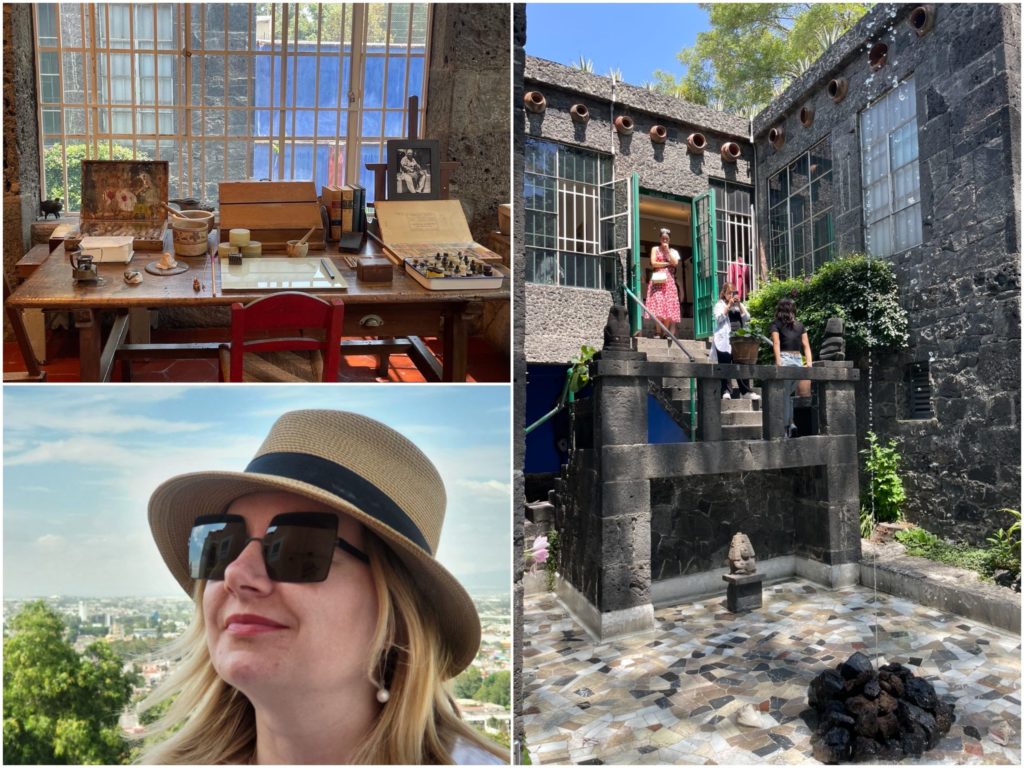
A 5-minute walk from Frida Kahlo’s house, and we found ourselves at the fortress-like home of Trotsky. Trotsky was friends with Rivera and lived at Rivera and Frida’s house for a long time. But he later moved to his own house, reportedly because of Rivera’s well-known jealousy. He was attacked several times, and the imposing house was turned into a fortress, enclosed by a brick wall.
Trotsky was protected by American bodyguards hired by the American Communist Party. He led a quiet life, raising chickens and geese in the inner courtyard, occasionally writing articles or engaging in discussions with a few close associates. By that time, all four of his children had already died, some from illnesses and some in the custody of the NKVD. Leon Davidovich Trotsky’s real surname was Bronstein, and the name Trotsky was given to him by his jailer, who had the last name Trotsky. Some sources say that he acquired the jailer’s passport during his escape, while others say he simply took this surname “in memory.”
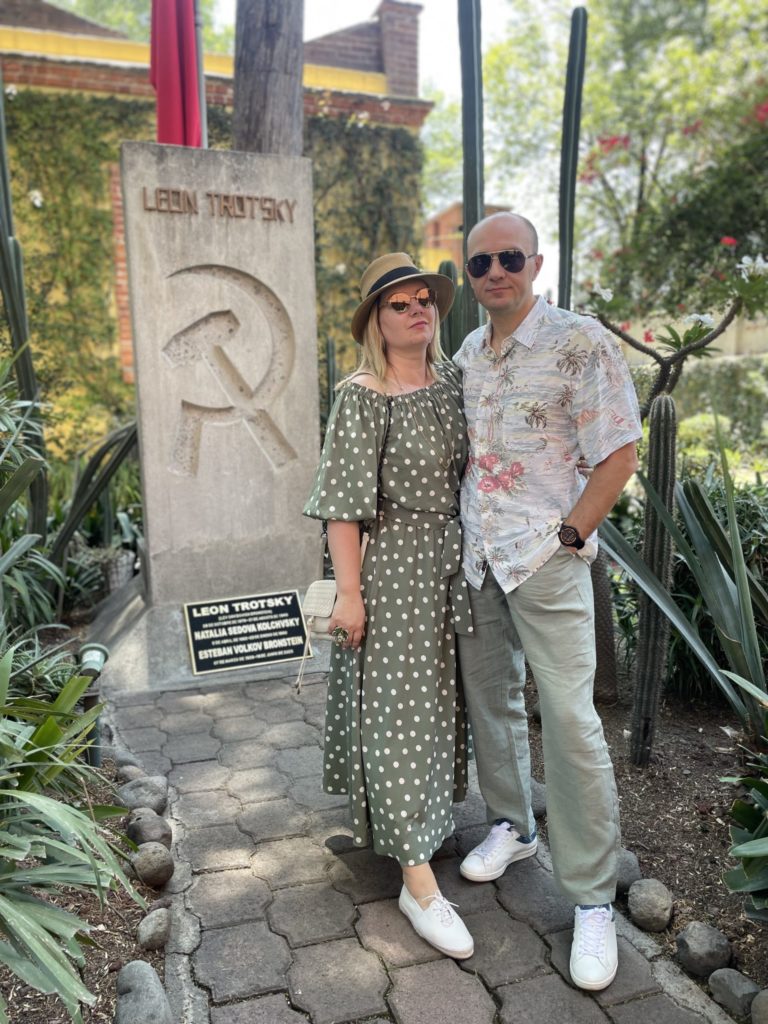
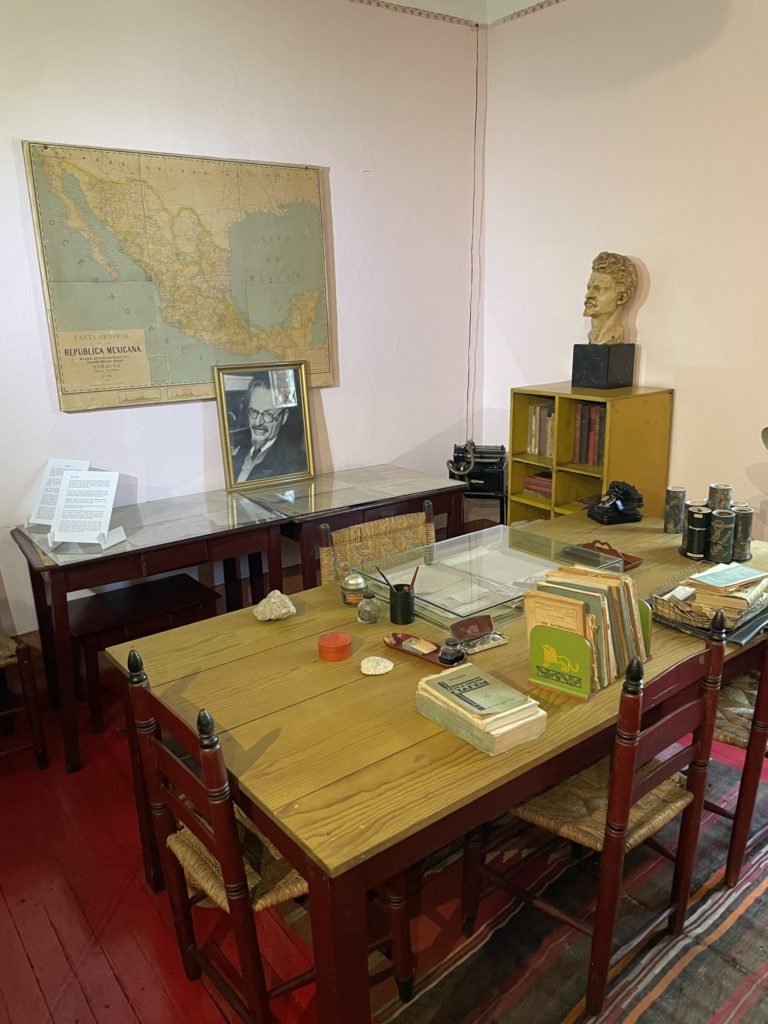
Trotsky was assassinated at his desk by one of his close associates and, concurrently, a Soviet agent, Ramon Mercader. Mercader had planned to quietly kill Trotsky and escape, but he couldn’t succeed in killing him instantly. Trotsky called for his security and managed to ask them not to kill Mercader. He died a day later. Mercader served his entire 20-year sentence, was later taken to Cuba, and then to the USSR. There, he was awarded the title of Hero of the Soviet Union, and he lived for another 18 years on an honorary pension.
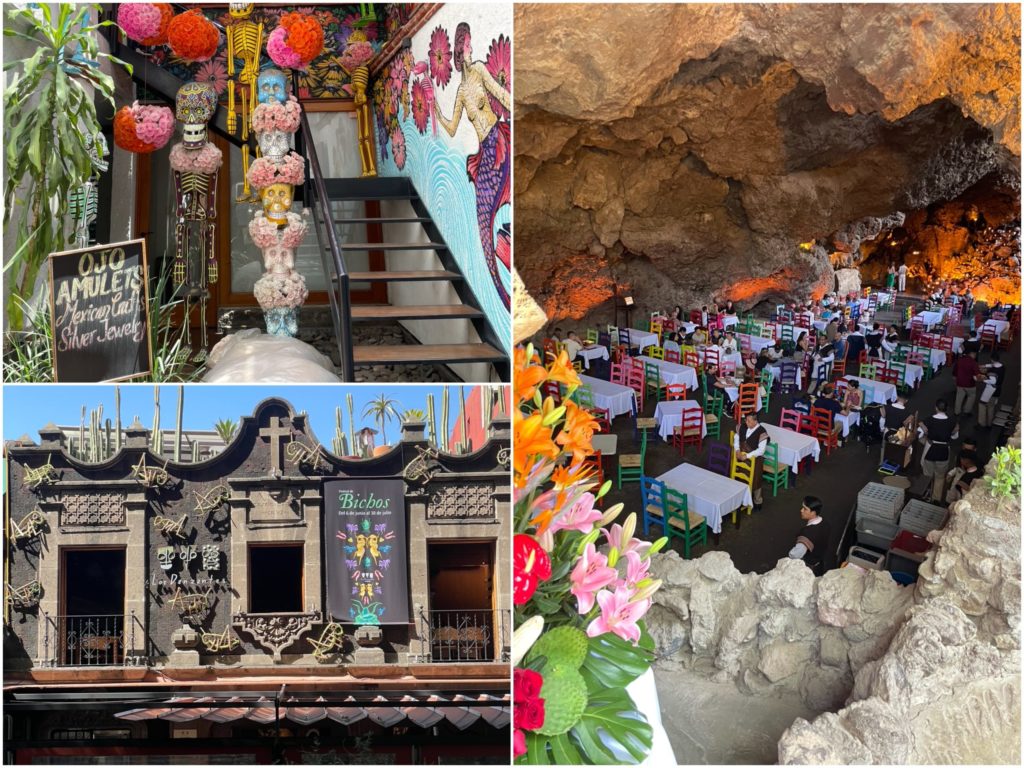
As for restaurants in Mexico, I had high expectations, more, something along the lines of the gastronomic capital of the world, Lima. There were indeed some excellent restaurants, in caves, trendy locations, with very interesting interiors and food presentation, but I didn’t experience anything remarkable.However, we didn’t fully immerse ourselves in the cuisine of the Oaxacan people; there happened to be an insect festival called “Bichos” in Mexico during those days, but we didn’t partake. I’ve seen fried crickets in China, of course, but a whole extensive menu consisting exclusively of insects was a first for me!
The latter part of our trip saw us heading to the Yucatán Peninsula, to the town of Mayakoba, in the resort city of Cancun The best hotels in this area – Rosewood, Banyan Tree, Fairmont, and Andaz are under the management of one owner.
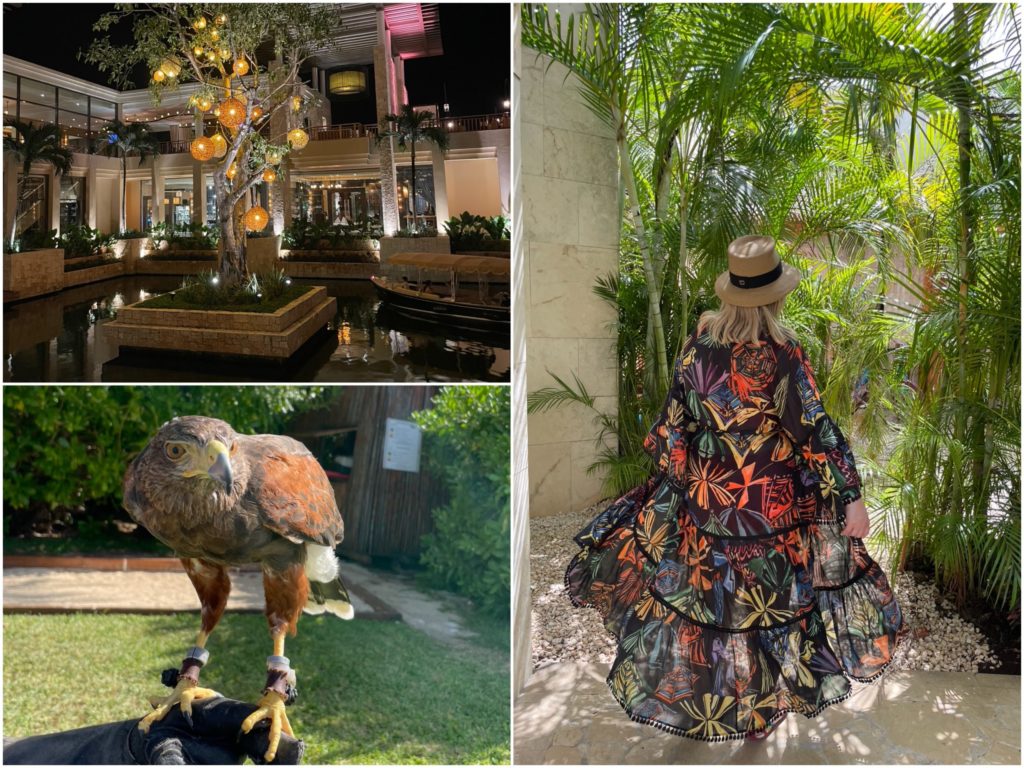
The entire area is covered with intersecting canals and rivers; they take you from the lobby to your villa on a boat. Our villa had one side facing the canal with its private dock, and the other side facing the sea. There’s an alternative to getting around the property – every guest is given a bicycle, and there’s plenty of places to ride around! There’s a 10km bike path through the jungle for wildlife watching, which is 10 kilometers long During our time there, I saw even more animals there than in the jungle – and mostly from the balcony of our villa! Coatis, raccoons, agoutis, monkeys, crocodiles in the canal, turtles, and huge carp were all a mere glance away – during breakfast, we even had our own hawk that would chase away pesky black crows trying to snatch something from the table. .
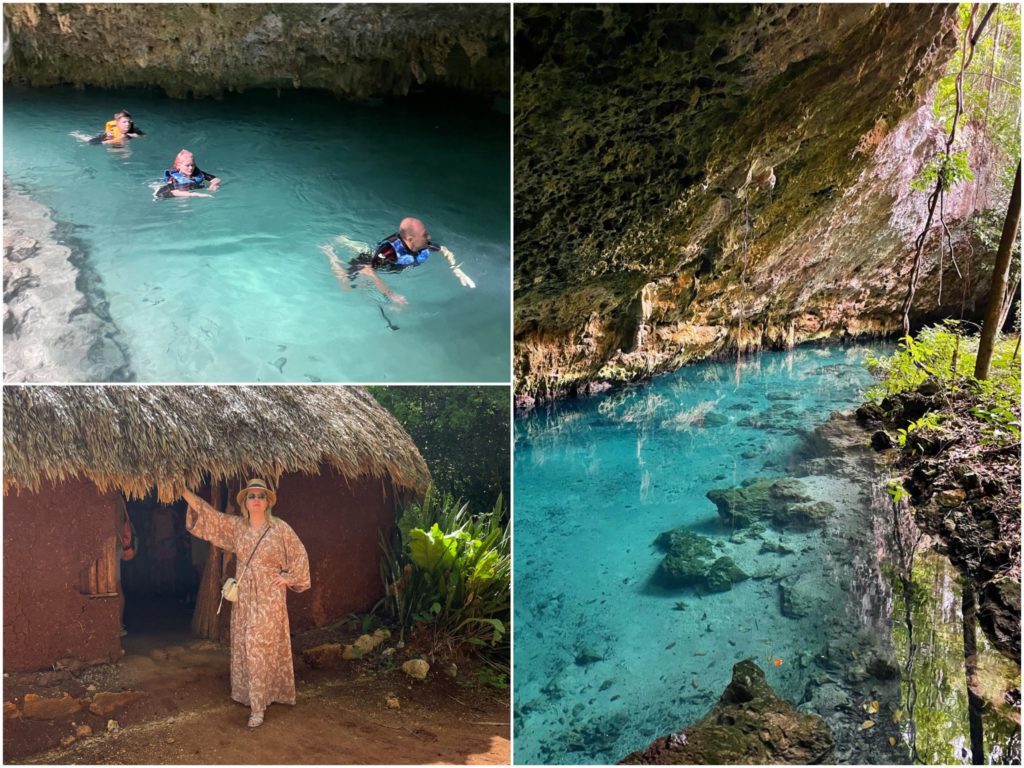
There are also vast golf courses on the property, and even an underground lake – a cenote. All of the fresh water in Yucatán comes from these underground lakes and rivers, which are incredibly clear and a sight to behold . Needless to say I spent a lot of time walking and biking around the property, or taking a boat.
As for the Rosewood hotel itself, legends were told about its highest level of service and the helpfulness of the staff, like the butler who would jump into a river teeming with crocodiles to save a guest’s hat, and so on. However, there are very few crocodiles here now; when they grow up, they are moved to the main river system, and here, they keep only relatively small ones. Our butler and other staff tried very hard to please us; in my case, it mostly came down to them finding interesting animals on the property, and I would go there to see them. There seem to be plenty of animals on the property, definitely more than just in the wild jungle, as it’s both safe and there’s more food. But seeing them isn’t that easy; you have to know what time of day and in which places they hang out.
However, there were also some downsides to this hotel. When we came back from excursions, the butler kept trying to offer us delicious cocktails right in the villa, bringing rare types of tequila and mescal, as a gift from the establishment. On the one hand, how can you refuse a cold cocktail with mescal in such heat after an excursion?! On the other hand, drinking in such heat is not very healthy… Another big downside and a major tragedy for the Yucatán is the environmental situation in the sea. The water is very warm, and for about six years now, annoying green algae have spread in it. The water near the shore is not clear but rather swampy green. From the sea, it looks beautiful, and you can swim in it, but it’s not very pleasant. By the way, all the restaurants on the hotel’s property are exceptional; that’s where we indulged in gourmet dining!
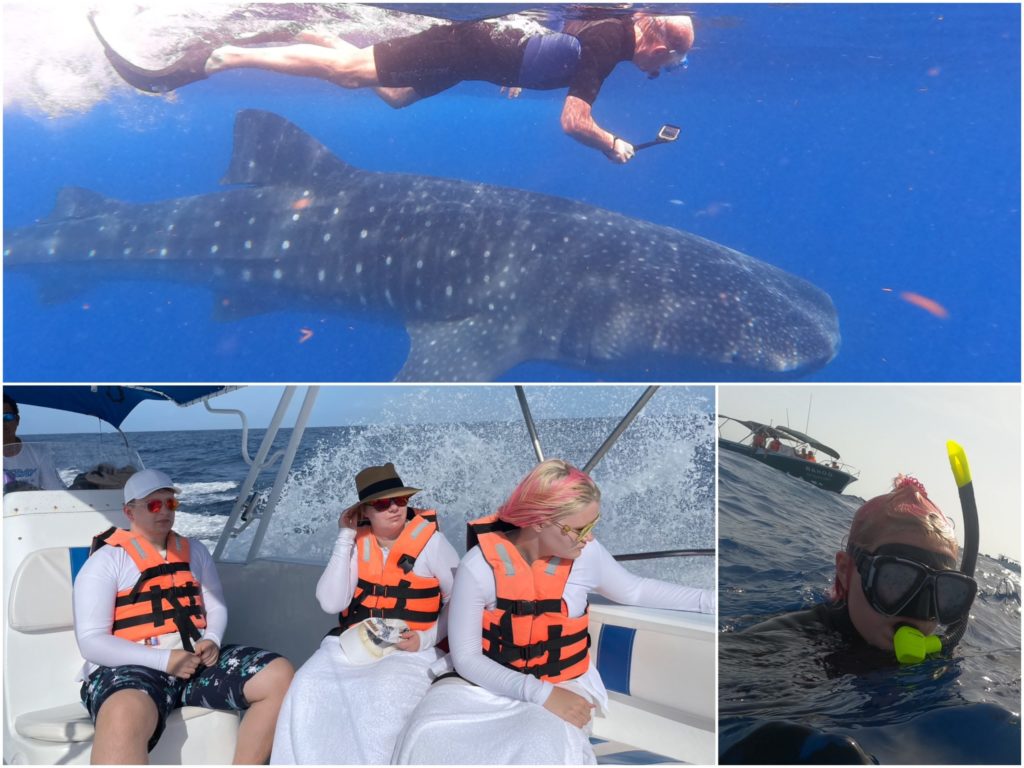
We were in Mexico in July, not the best time of the year. While it’s a bit hot in Mexico City, but tolerable since the city is at an altitude of 2200 meters above sea level and gets cool in the evening, in the Yucatán it’s scorching in July. That’s why all the excursions start very early in the morning. But it’s also the season for whale sharks. Due to the same algae and warm water, they now feed farther from the shore, about 45 minutes away by speedboat. However, the sea there is nice, clear, and pleasant. The whale shark season is very short, lasting just a couple of months, so the people who run these excursions need to provide special instruction, explaining what service is and proper equipment. Because, as a baseline, they give you short flippers and a large life jacket, and with such equipment, you can only watch as the shark swims by. And it just swims in a straight line, following the plankton, at a speed of 3-5 km/h. To swim with it, you need proper flippers and a wetsuit, then your speed is quite comparable to theirs. Initially, they don’t provide this equipment, citing strict laws. I think this is their way of trying to reduce the impact of tourists on the sharks. In general, if you really want to, you can swim with the sharks like a human, and they also know how to provide service! “Our” shark was about 12 meters long, gigantic! I swam with it until I lost consciousness from exhaustion. Very cool! Then we were taken to one of the islands where we swam quite comfortably, although there were quite a few people on the beach. Well, it’s not as noticeable from the boat; we went swimming right from the boat. And the guys on the boat made us an amazingly delicious ceviche from some freshly caught sea creatures!
If we can’t swim on our luxurious hotel beach, we’ll swim everywhere else! And we went floating with flashlights along an underground river! Floating through caves is very cool! The water is clear, 21 degrees Celsius, and there are plenty of bats. In the photos below, the river is already emerging from underground, but inside the cave, it’s silent, pitch dark, with stalactites and bats. It reminded me somewhat of the Waitomo Caves in New Zealand, although there we were on a boat and there were those glow worms that gave it a truly otherworldly feeling. But here, we were in the water ourselves, able to dive and look around. Fantastic! Amazing experiences.
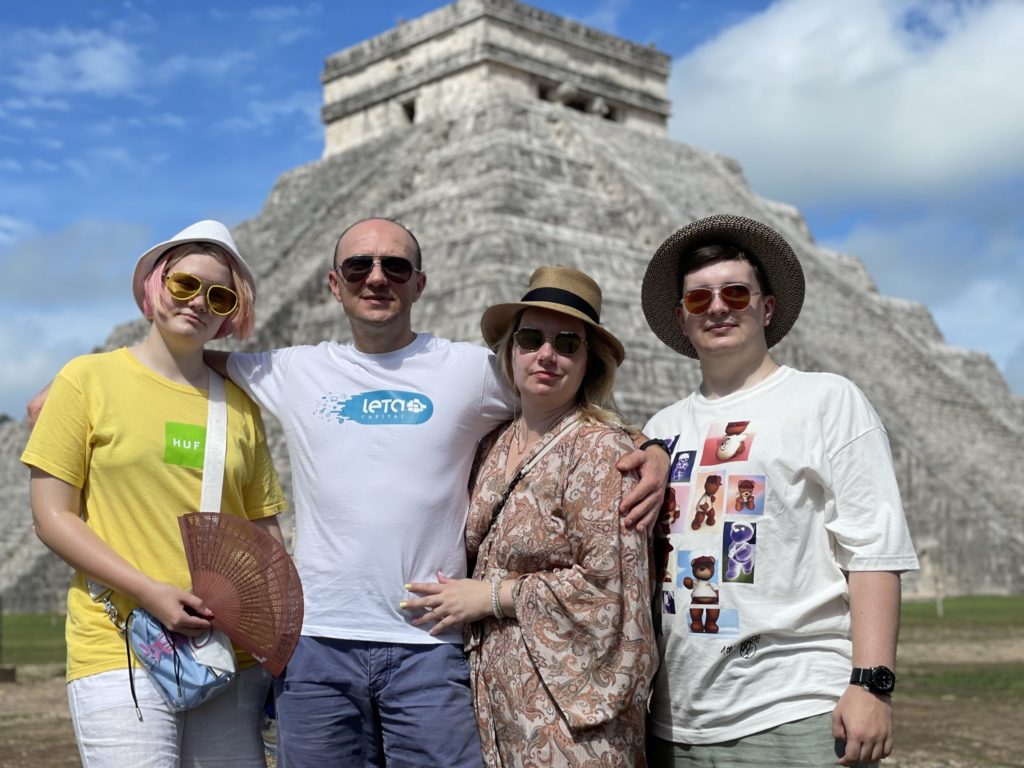
Furthermore, on the Yucatan Peninsula, you can’t miss visiting the ancient complex of Chichen Itza. I’ve already mentioned above the audio effects, space-age construction technology, and incredibly well-preserved (sometimes well-restored) structures. With a good guide, it’s the perfect place! In general, we really enjoyed Mexico. We already have several routes in mind for future trips. There’s so much more to see in Mexico, and also Guatemala, where there is even more Maya history and new routes to explore. We will definitely be back!
The End!